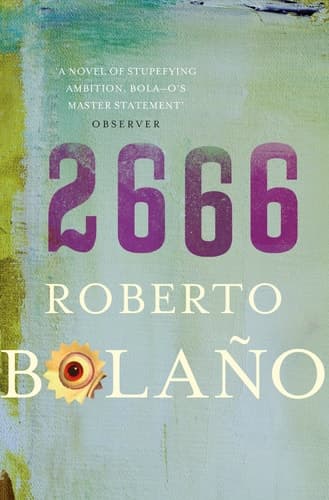
2666 - 3-Volume Boxed Set A Novel
Roberto BolañoPublished2009
Pages898
Formatpaperback
PublisherPan Macmillan
Synopsis
An American sportswriter, an elusive German novelist, and a teenage student interact in an urban community on the U.S.-Mexico border where hundreds of young factory workers have disappeared.
Recommendations
The Savage Detectives A Novel
by Roberto Bolaño
Wait—I know what you're thinking. But hear me out: if you haven't read this yet, it's essential. Where 2666 fractures reality across a border town, this earlier novel fractures it across continents and decades through the obsessive pursuit of a vanished poet. It has that same intoxicating quality of following ghosts and absences, but with a more kinetic, almost noir energy that might feel like a palate cleanser before diving into another 900-page commitment.
View book
The Apocalyptic Vision of Mikhail Bulgakov's the Master and Margarita (Studies in Slavic Language & Literature)
by Edward E. Ericson
This 1967 Soviet novel does something Bolaño admired: it weaves together multiple realities—a Soviet Moscow, a biblical retelling, a love story—without ever letting you feel like you're reading separate threads. Like 2666, it's genuinely unsettling beneath its surface strangeness, and it treats the supernatural and the mundane with the same deadpan seriousness, creating this uncanny atmosphere where terrible things happen in plain sight.
View bookThe Savage Detectives A Novel
by Roberto Bolaño
A completely different book than Bolaño's (I promise). Villalobos writes about a child narrator in a Mexican cartel household with a tragicomic voice that somehow finds absurdity in horror—similar to how 2666 refuses to let you look away from violence by making it mundane. It's much shorter and more intimate, but it shares that unflinching Mexican perspective on criminality and corruption that Bolaño was obsessed with.
View book
The Style of Connectedness Gravity's Rainbow and Thomas Pynchon
by Thomas Moore
I'm recommending this as your "next level" challenge rather than comfort read. Like 2666, it's a sprawling, paranoid novel where you're never quite sure what's real, what's conspiracy, and what's just narrative noise. Both books treat their readers as intelligent enough to handle ambiguity and refuse easy resolution. If Bolaño's border violence unsettled you, Pynchon's post-WWII chaos will haunt you differently—more abstract, more hallucinatory.
View book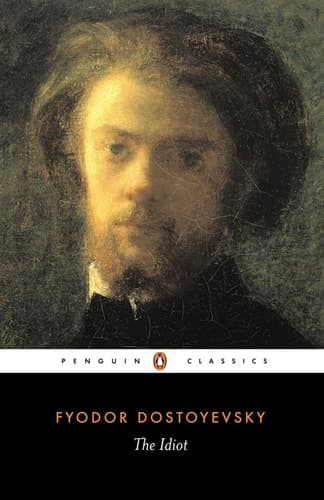
The Idiot
by Fyodor Dostoyevsky
Here's your surprise pick: a contemporary novel about a literature student navigating the internet age, which sounds nothing like 2666 until you realize both are about intelligent people trying to make sense of systems (literary canon, internet culture, disappearances, algorithms) that resist comprehension. Batuman writes with Bolaño's eye for the absurd and the devastating, but she's mapping the digital world the way he mapped the border—as a space where meaning dissolves.
View bookAbout Roberto Bolaño
Biography coming soon.
View author page