
Synopsis
THE POSTHUMOUS MASTERWORK FROM “ONE OF THE GREATEST AND MOST INFLUENTIAL MODERN WRITERS” (JAMES WOOD, THE NEW YORK TIMES BOOK REVIEW) Composed in the last years of Roberto Bolaño’s life, 2666 was greeted across Europe and Latin America as his highest achievement, surpassing even his previous work in its strangeness, beauty, and scope. Its throng of unforgettable characters includes academics and convicts, an American sportswriter, an elusive German novelist, and a teenage student and her widowed, mentally unstable father. Their lives intersect in the urban sprawl of SantaTeresa—a fictional Juárez—on the U.S.-Mexico border, where hundreds of young factory workers, in the novel as in life, have disappeared.
Recommendations
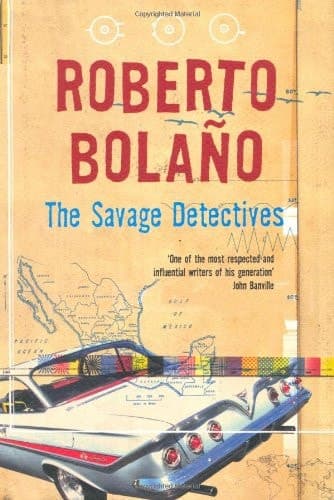
The Savage Detectives A Novel
by Roberto Bolaño
Wait—I know what you're thinking. But hear me out: if you haven't read this yet, it's essential. Where 2666 fractures reality across multiple narrators and timelines, The Savage Detectives does something even more daring with its structure, following two poets through a labyrinthine search across Mexico and Europe. It has that same intoxicating quality of following characters into moral and geographical darkness, but with a different formal architecture that will make you see 2666 in new ways.
View book
The Apocalyptic Vision of Mikhail Bulgakov's the Master and Margarita (Studies in Slavic Language & Literature)
by Edward E. Ericson
Published in 1967, this Soviet masterpiece shares 2666's refusal to stay in one place—it spirals between Soviet Moscow, ancient Jerusalem, and the supernatural, with multiple plot threads that seem unrelated until they catastrophically collide. Like Bolaño, Bulgakov uses fragmentation not as a gimmick but as a way to capture how violence and absurdity actually feel when they're happening around you. The tone is darker and stranger than you'd expect from its era.
View book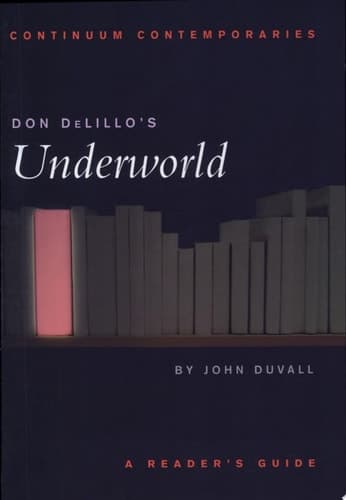
Don DeLillo's Underworld A Reader's Guide
by John Duvall
DeLillo constructs his own sprawling, backwards-moving epic about American paranoia, waste, and the Cold War—it has that same architectural ambition as 2666, where seemingly minor characters and objects accumulate into something massive and inescapable. Both novels treat their settings (the U.S.-Mexico border in Bolaño, post-war America in DeLillo) as characters themselves, places where history has left visible scars. DeLillo's prose is tighter, but the scope is equally overwhelming.
View book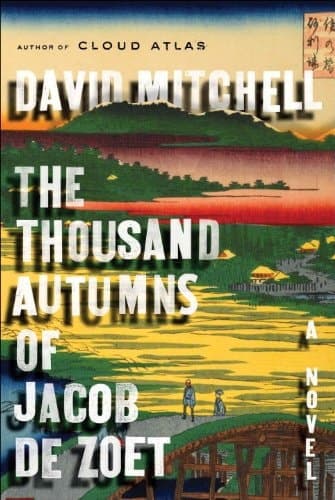
The Thousand Autumns of Jacob De Zoet A Novel
by David Stephen Mitchell
Here's your surprise pick: Mitchell takes the maximalist, time-spanning ambitions you loved in 2666 and channels them through a historical novel about Dutch traders in 18th-century Japan. What makes this work is that Mitchell uses the formal constraints of the historical setting to create the same effect Bolaño achieves through fragmentation—characters separated by geography and time, slowly revealing how power, desire, and violence connect across vast distances. It's intricate without being chaotic.
View bookAbout Roberto Bolaño
Biography coming soon.
View author page