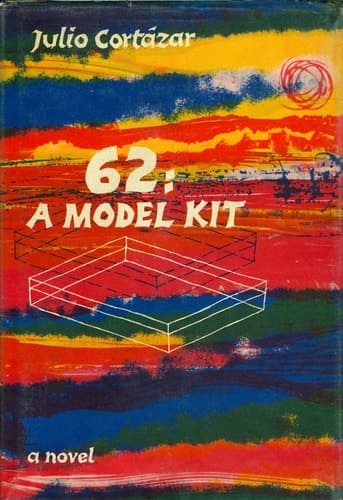
Synopsis
Text: English, Spanish (translation)
Recommendations
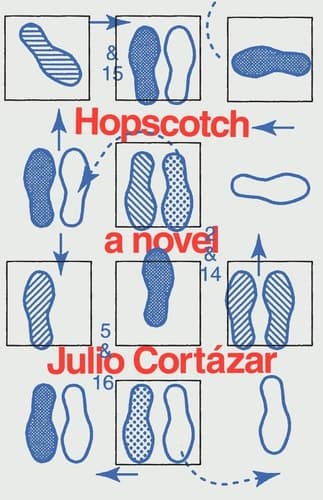
Hopscotch A Novel
by Julio Cortázar
Wait—I know what you're thinking. But hear me out: if you haven't read Cortázar's masterpiece yet, this is the natural next step after the playful metafictional games of '62.' Hopscotch takes that same spirit of narrative experimentation and scales it into something that genuinely rewires how you think about reading itself—you can jump between chapters, follow different paths, and the book becomes less a story you consume and more a structure you navigate.
View book
Franz Kafka's the Castle (Bloom's Modern Critical Interpretations)
by Unknown
Kafka's unfinished novel shares '62's obsession with systems that resist comprehension—here, a bureaucratic castle that may or may not exist in any meaningful way. Both works trap you in a labyrinth where the rules keep shifting, and both authors seem genuinely amused by how frustrated you'll become trying to find solid ground. The difference is Kafka's tone is bleaker, which makes the absurdity even more cutting.
View book
If on a Winter's Night a Traveler Introduction by Peter Washington
by Italo Calvino
Calvino does for the act of reading what Cortázar does for narrative construction—he makes you the protagonist of a book that keeps interrupting itself with ten different novels-within-the-novel. It's playful in the same way '62' is playful, but where Cortázar is cryptic and fragmented, Calvino is almost flirtatious with his reader, constantly winking at you about the artifice of storytelling.
View book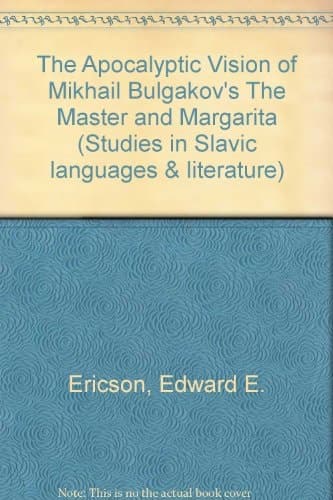
The Apocalyptic Vision of Mikhail Bulgakov's the Master and Margarita (Studies in Slavic Language & Literature)
by Edward E. Ericson
Here's your surprise pick: a Soviet-era novel that feels like it was written in the same artistic universe as '62,' but with more plot, more magic, and considerably more political bite. Bulgakov weaves together a contemporary Moscow story, a retelling of Pontius Pilate, and a devil's visit to Earth—all at once—creating the kind of dizzying, recursive narrative that rewards the same kind of active reading Cortázar demands, but with genuine narrative momentum underneath.
View bookAbout Julio Cortázar
J
Julio Cortázar
1914–1984
Julio Florencio Cortázar (Ixelles, 26 de agosto de 1914-París, 12 de febrero de 1984) fue un escritor, poeta y profesor argentino. También trabajó como traductor, oficio que desempeñó para la Unesco y varias editoriales. En 1981, sin renunciar a su nacionalidad argentina, optó por la francesa en protesta contra la dictadura militar en su país, que prohibió sus libros y que él denunció a la prensa internacional desde su residencia en París. Se lo considera uno de los autores más innovadores y originales de su tiempo, maestro del relato corto, la prosa poética y la narración breve en general, y creador de importantes novelas, en la cual destaca *Rayuela,* que inauguraron una nueva forma de hacer literatura en el mundo hispano. Junto a Gabriel García Márquez, Mario Vargas Llosa y Carlos Fuentes, fue uno de los exponentes centrales del *boom* latinoamericano. Fuente: [Wikipedia](https://es.wikipedia.org/wiki/Julio_Cort%C3%A1zar) ---------- Julio Cortázar, born Jules Florencio Cortázar, was an Argentine author of novels and short stories. He influenced an entire generation of Latin American writers from Mexico to Argentina, and most of his best-known work was written in France, where he established himself in 1951. Source and more information: http://en.wikipedia.org/wiki/Julio_Cort%C3%A1zar
View author page