
A Brief History of Saudi Arabia
James WynbrandtPublished2004
Pages334
Formatpaperback
PublisherFacts On File
Synopsis
An important ally in the Middle East, Saudi Arabia is a mysterious land to most Americans, who may know it only as the place where Islam originated and Islamic fundamentalism is a powerful force. In recent years, the relationship between the governments of the United States and Saudi Arabia has come under increasing pressure, and among the general public in the United States there is a need and desire for a greater understanding of this country. A language barrier and the closed nature of the Saudi Arabian society have done little to invite or ease open inquiry to all but trained academics and linguists. A Brief History of Saudi Arabia redresses the lack of suitable references to this unique and important country and offers a balanced, informed perspective on its long history.
Recommendations
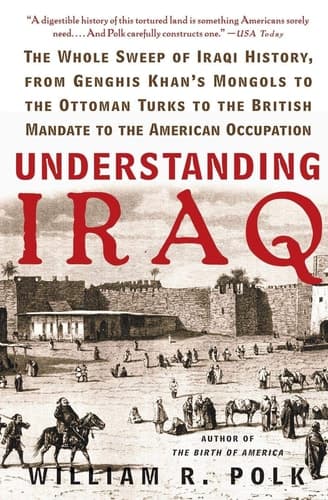
Understanding Iraq The Whole Sweep of Iraqi History, from Genghis Khan's Mongols to the Ottoman Turks to the British Mandate to the American Occupation
by William R. Polk
Since you appreciated Wynbrandt's ability to untangle a complex nation's identity through its history, Baer does something similarly impressive with the Ottoman Empire—another misunderstood Islamic power that shaped global politics. He writes with the same accessible clarity but adds vivid character portraits of sultans and ordinary people, making the political machinations feel immediate rather than distant.
View book
Reading Lolita in Tehran A Memoir in Books
by Azar Nafisi
This is my gentle surprise for you—it's a memoir rather than straight history, but it does something Wynbrandt's book hints at: it shows you what daily life actually *feels* like inside a closed Islamic society through the eyes of someone living it. Nafisi uses literature as her lens, which gives you intimate access to how ordinary Iranians navigate ideology, desire, and resistance in ways no policy analysis could capture.
View book
The Clash of Civilizations and the Remaking of World Order
by Samuel P. Huntington
Published in 1996, this gives you the theoretical framework for understanding *why* the U.S.-Saudi relationship matters so much—Huntington directly addresses the role of Islamic civilization in global power structures. It's provocative and debated, but it'll deepen your grasp of the geopolitical tensions Wynbrandt describes, especially regarding how different cultures perceive each other.
View book
The Birth of Saudi Arabia: Britain and the Rise of the House of Sa'ud
by Gary Troeller
If you want to go deeper into Saudi Arabia specifically, Holden's account is more granular than Wynbrandt's—he focuses intensely on the family dynamics and power struggles within the royal house itself. It reads almost like a political thriller while maintaining scholarly rigor, showing you how personal rivalries and tribal allegiances shaped the nation's decisions.
View book
The End of Globalization Why Global Strategy is a Myth & how to Profit from the Realities of Regional Markets
by Alan M. Rugman
Here's another calculated risk: Grandin examines how Americans construct narratives about foreign lands and threats, which directly relates to why most Americans find Saudi Arabia 'mysterious' as Wynbrandt notes. By understanding how the U.S. has historically imagined its borders and enemies, you'll see how the Saudi relationship fits into a much longer American pattern of projection and misunderstanding.
View bookAbout James Wynbrandt
Biography coming soon.
View author page