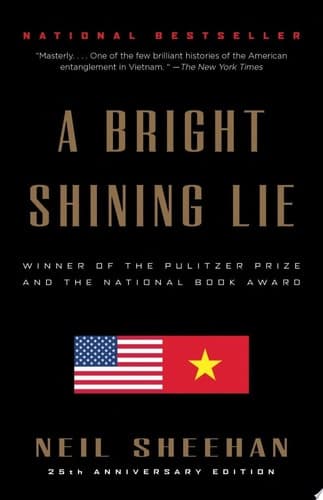
A Bright Shining Lie John Paul Vann and America in Vietnam (Pulitzer Prize Winner)
Neil SheehanPublished1989
Pages896
Formatpaperback
PublisherKnopf Doubleday Publishing Group
Synopsis
One of the most acclaimed books of our time—the definitive Vietnam War exposé and the winner of the Pulitzer Prize and the National Book Award.
When he came to Vietnam in 1962, Lieutenant Colonel John Paul Vann was the one clear-sighted participant in an enterprise riddled with arrogance and self-deception, a charismatic soldier who put his life and career on the line in an attempt to convince his superiors that the war should be fought another way. By the time he died in 1972, Vann had embraced the follies he once decried. He died believing that the war had been won.
In this magisterial book, a monument of history and biography that was awarded the National Book Award and the Pulitzer Prize for Nonfiction, a renowned journalist tells the story of John Vann—"the one irreplaceable American in Vietnam"—and of the tragedy that destroyed a country and squandered so much of America's young manhood and resources.
Recommendations
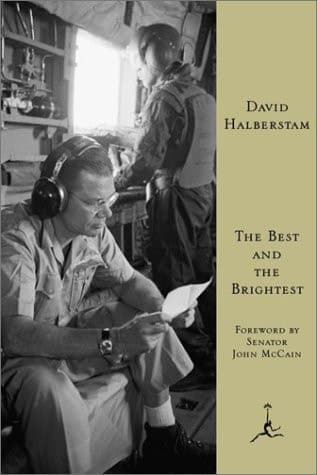
The Best and the Brightest
by David Halberstam
Halberstam does for Kennedy's foreign policy establishment what Sheehan does for Vann—he traces how intelligent, confident men became architects of catastrophe through incremental compromises and institutional blindness. Where Sheehan focuses on one man's disillusionment, Halberstam pulls back to show the systemic arrogance that infected an entire generation of policymakers, making this the perfect companion piece that explains the machinery Vann was fighting against.
View book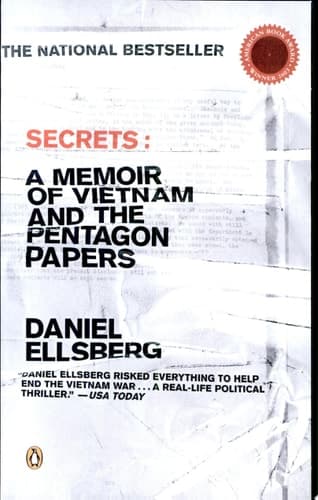
Secrets A Memoir of Vietnam and the Pentagon Papers
by Unknown
If Sheehan's book made you hungry to understand *how* the deception actually worked—the classified documents, the deliberate misrepresentations to Congress—Ellsberg's firsthand account gives you the smoking gun. He was there, reading these reports in real time, and his decision to leak them is itself a story of conscience versus institutional loyalty that echoes Vann's moral struggle.
View book
Gesellschaftskritik in Truman Capotes In Cold Blood
by Natalie Lewis
This might seem like a left turn, but stay with me: Capote pioneered the literary nonfiction technique that Sheehan perfected—the ability to construct a gripping narrative from real events while maintaining journalistic rigor and psychological depth. Where Sheehan uses Vann's life to interrogate a war, Capote uses a murder to interrogate American violence itself. Both books have that rare quality of reading like novels while feeling absolutely true.
View book
Dispatches
by Michael Herr
Where Sheehan gives you the strategic and biographical view of Vietnam, Herr gives you the sensory, moment-to-moment reality of being there—the sound, the drugs, the gallows humor, the madness. His prose is hallucinogenic and immediate in ways that complement Sheehan's more measured historical approach, and together they create a complete picture of how the war felt to those inside it.
View book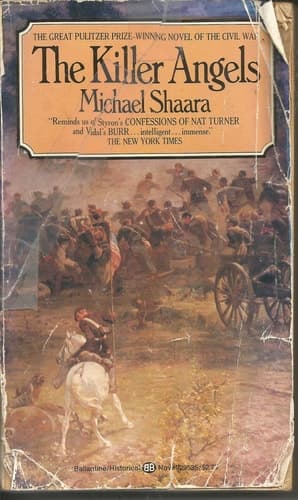
The Killer Angels
by Michael Shaara
A historical novel about Gettysburg that does something similar to what Sheehan achieves—it takes a pivotal military moment and explores it through the eyes of men of conscience trying to navigate impossible circumstances. Shaara shows how individual character and institutional pressure collide in wartime, and his ability to make you understand *why* intelligent people make catastrophic decisions will feel familiar after finishing Vann's story.
View bookAbout Neil Sheehan
N
Neil Sheehan
Born 1936
Cornelius Mahoney "Neil" Sheehan (born October 27, 1936) is an American journalist. As a reporter for The New York Times in 1971, Sheehan obtained the classified Pentagon Papers from Daniel Ellsberg. His series of articles revealed a secret United States Department of Defense history of the Vietnam War and led to a US Supreme Court case, *New York Times Co. v. United States*, 403 U.S. 713 (1971), when the United States government failed to halt publication. He received a Pulitzer Prize and a National Book Award for his 1988 book *A Bright Shining Lie*, about the life of Lieutenant Colonel John Paul Vann and the United States involvement in the Vietnam War. **Source**: [Neil Sheehan](https://en.wikipedia.org/wiki/Neil_Sheehan) on Wikipedia.
View author page