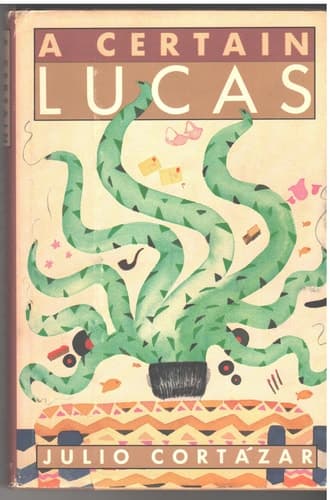
UN Tal Lucas/a Certain Lucas (Literatura Alfaguara ; 41) (Spanish Edition)
Julio CortázarPublished1984
Pages160
Formathardcover
PublisherAlfred A. Knopf
Synopsis
A series of short takes carries readers into the mind and life of one man, back out to his trendy world, and--once again--into his life, creating a rounded portrait of an individual
Recommendations
Hopscotch A Novel
by Julio Cortázar
Wait—I know what you're thinking. But hear me out: if you loved the fragmented, kaleidoscopic way Cortázar builds Lucas as a character through disconnected moments, Hopscotch takes that technique and makes it the entire architecture of the novel. You can read it linearly or jump between chapters as the author suggests, and each path reveals different facets of the protagonist's consciousness. It's Cortázar perfecting the method he used in Lucas.
View book
The Savage Detectives A Novel
by Roberto Bolaño
Bolaño constructs his characters through overlapping testimonies, gossip, and partial glimpses—much like Cortázar does with Lucas—but he stretches this across a sprawling, almost archaeological narrative that feels like eavesdropping on a thousand conversations. The portrait that emerges is messy, contradictory, and utterly alive, capturing how we actually know people through fragments rather than coherent biography.
View book
Invisible Cities
by Italo Calvino
Calvino builds an entire world through Marco Polo's descriptions of impossible cities to Kublai Khan—each one a brief, poetic vignette that accumulates into something larger than the sum of its parts. Like Lucas, it's a book about how we construct identity and meaning through small, precise observations, but Calvino applies this technique to cities and memory rather than a single consciousness.
View book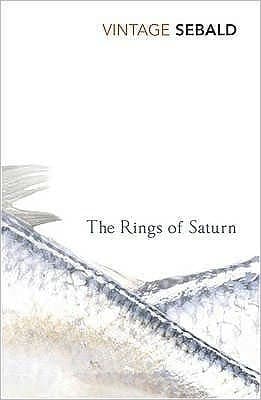
The Rings of Saturn
by Winfried Georg Sebald
This is your surprise recommendation: it reads like a meditation on memory and decline, moving through a landscape while the narrator's mind drifts between personal recollection, historical digression, and philosophical observation. Sebald captures interiority the way Cortázar does—through accumulation of small, seemingly random details—but he grounds it in actual places and historical weight. It's introspective fiction that feels almost like documentary.
View book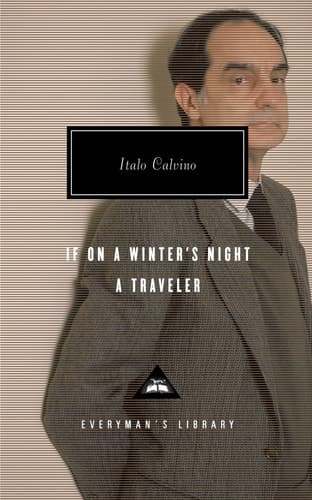
If on a Winter's Night a Traveler Introduction by Peter Washington
by Italo Calvino
Calvino addresses you directly as 'the Reader' and fragments narrative across multiple incomplete novels, making the act of reading itself the subject. Like Lucas, it's playfully self-aware about how we construct meaning from partial information, but Calvino makes the reader complicit in that construction—you're not just observing a character's fragmented life, you're living through fragmented storytelling yourself.
View bookAbout Julio Cortázar
J
Julio Cortázar
1914–1984
Julio Florencio Cortázar (Ixelles, 26 de agosto de 1914-París, 12 de febrero de 1984) fue un escritor, poeta y profesor argentino. También trabajó como traductor, oficio que desempeñó para la Unesco y varias editoriales. En 1981, sin renunciar a su nacionalidad argentina, optó por la francesa en protesta contra la dictadura militar en su país, que prohibió sus libros y que él denunció a la prensa internacional desde su residencia en París. Se lo considera uno de los autores más innovadores y originales de su tiempo, maestro del relato corto, la prosa poética y la narración breve en general, y creador de importantes novelas, en la cual destaca *Rayuela,* que inauguraron una nueva forma de hacer literatura en el mundo hispano. Junto a Gabriel García Márquez, Mario Vargas Llosa y Carlos Fuentes, fue uno de los exponentes centrales del *boom* latinoamericano. Fuente: [Wikipedia](https://es.wikipedia.org/wiki/Julio_Cort%C3%A1zar) ---------- Julio Cortázar, born Jules Florencio Cortázar, was an Argentine author of novels and short stories. He influenced an entire generation of Latin American writers from Mexico to Argentina, and most of his best-known work was written in France, where he established himself in 1951. Source and more information: http://en.wikipedia.org/wiki/Julio_Cort%C3%A1zar
View author page