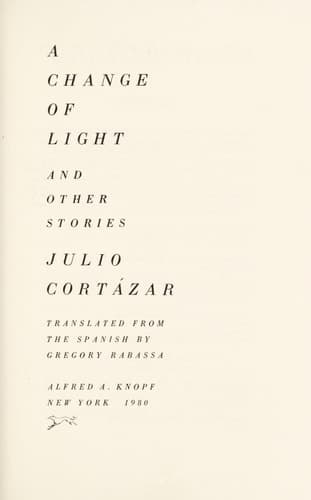
A Change of Light and Other Stories
Julio CortázarPublished1980
Pages275
Formathardcover
PublisherAlfred A. Knopf
Synopsis
The masterful Argentinian writer includes nineteen stories penned during the last seven years, tales about a couple's adventurous vacation in Africa, a disturbed man's erotic subway games, and other intriguing activities and situations
Recommendations
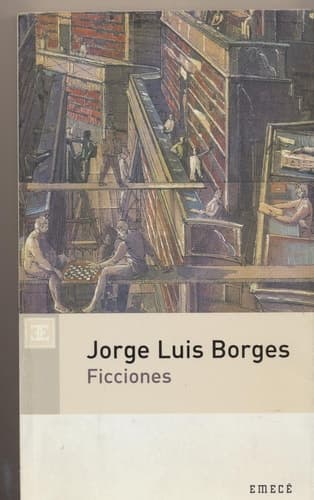
Ficciones
by Jorge Luis Borges
Borges shares Cortázar's gift for collapsing reality through short fiction, but where Cortázar grounds his stories in sensory, almost surreal everyday moments, Borges builds impossible architectures of ideas—libraries that contain all books, cities that are also maps. You'll recognize the same Latin American modernist sensibility, but experienced through pure intellectual vertigo rather than psychological unease.
View book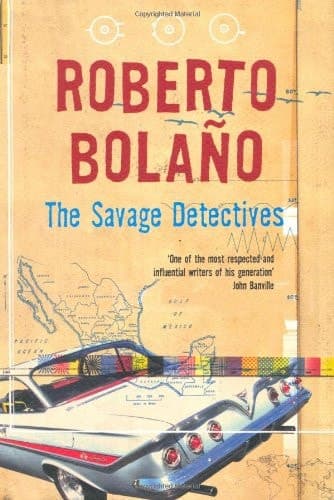
The Savage Detectives A Novel
by Roberto Bolaño
Bolaño takes the fragmented, digressive energy you felt in Cortázar's stories and expands it into a novel that reads like a fever dream of literary obsession. Both writers are fascinated by how people behave when they're slightly outside normal social bounds—Cortázar's subway wanderer and Bolaño's roving poets share that same magnetic strangeness—but Bolaño adds a layer of melancholy and historical weight that gives the chaos real stakes.
View book
The Apocalyptic Vision of Mikhail Bulgakov's the Master and Margarita (Studies in Slavic Language & Literature)
by Edward E. Ericson
This 1960s Russian novel has the same tonal whiplash as Cortázar—moving between the mundane and the fantastical without warning—but it's doing it in service of political allegory rather than pure psychological exploration. The Devil literally arrives in Moscow, yet the book treats this with the same matter-of-fact intensity Cortázar brings to a man's obsession with a woman on the subway. It's your first real departure from the contemporary moment, and it'll show you how timeless Cortázar's techniques actually are.
View book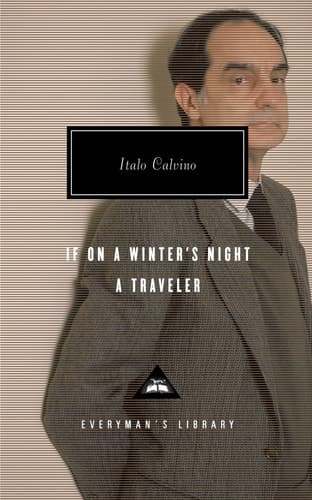
If on a Winter's Night a Traveler Introduction by Peter Washington
by Italo Calvino
Calvino is doing something Cortázar only hints at—he's making the *act of reading itself* the subject of the story. You'll find the same playful disruption of narrative expectations, the same sense that reality is more fragile than we pretend, but Calvino weaponizes it against the reader directly. It's a surprise recommendation because it's technically experimental fiction, but it has the same intimate, slightly unsettling quality as Cortázar's best work.
View bookAbout Julio Cortázar
J
Julio Cortázar
1914–1984
Julio Florencio Cortázar (Ixelles, 26 de agosto de 1914-París, 12 de febrero de 1984) fue un escritor, poeta y profesor argentino. También trabajó como traductor, oficio que desempeñó para la Unesco y varias editoriales. En 1981, sin renunciar a su nacionalidad argentina, optó por la francesa en protesta contra la dictadura militar en su país, que prohibió sus libros y que él denunció a la prensa internacional desde su residencia en París. Se lo considera uno de los autores más innovadores y originales de su tiempo, maestro del relato corto, la prosa poética y la narración breve en general, y creador de importantes novelas, en la cual destaca *Rayuela,* que inauguraron una nueva forma de hacer literatura en el mundo hispano. Junto a Gabriel García Márquez, Mario Vargas Llosa y Carlos Fuentes, fue uno de los exponentes centrales del *boom* latinoamericano. Fuente: [Wikipedia](https://es.wikipedia.org/wiki/Julio_Cort%C3%A1zar) ---------- Julio Cortázar, born Jules Florencio Cortázar, was an Argentine author of novels and short stories. He influenced an entire generation of Latin American writers from Mexico to Argentina, and most of his best-known work was written in France, where he established himself in 1951. Source and more information: http://en.wikipedia.org/wiki/Julio_Cort%C3%A1zar
View author page