Synopsis
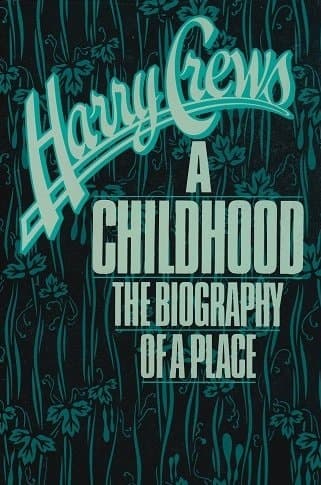
A Childhood is the unforgettable memoir of Harry Crews's earliest years, a sharply remembered portrait of the people, locales, and circumstances that shaped him - and destined him to be a storyteller. Crews was born in the middle of the Great Depression, in a one-room sharecropper's cabin at the end of a dirt road in rural south Georgia. If Bacon County was a place of grinding poverty, poor soil, and blood feuds, it was also a deeply mystical place, where snakes talked, birds could possess a small boy by spitting in his mouth, and faith healers and conjure women kept ghosts and devils at bay. At once shocking and elegiac, heartrending and comical, A Childhood not only recalls the transforming events of Crews's youth but conveys his growing sense of self in a world "in which survival depended on raw courage, a courage born out of desperation and sustained by a lack of alternatives".
Recommendations
Safe at Last in the Middle Years The Invention of the Midlife Progress Novel : Saul Bellow, Margart Drabble, Anne Tyler, and John Updike
by Margaret Morganroth Gullette
Like Crews, Ernaux uses her own life as a lens to examine an entire era—but she does it by stepping outside herself entirely, narrating her story in the collective 'we' of postwar France. You'll find that same unflinching eye for how poverty, geography, and circumstance shape identity, except she's documenting the slow transformation of a society rather than a single sharecropper's cabin. The effect is oddly intimate despite the distance.
View book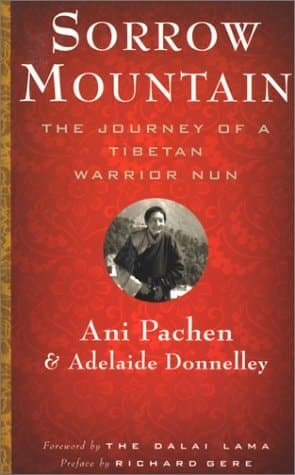
Sorrow Mountain The Journey of a Tibetan Warrior Nun
by Ani Pachen
This is your surprise pick—it reads like Crews's memoir but filtered through an entirely different spiritual and political landscape. Pachen's account of growing up in Tibet, surviving Chinese occupation, and finding faith in the most brutal circumstances has that same raw courage Crews describes, that same sense of a person forged by desperation rather than defeated by it. The mysticism here is Buddhist rather than Southern folk religion, but it carries the same weight.
View book
The Road Back
by Erich Maria Remarque
Published in 1931, this gives you that different-decade requirement, and it shares Crews's gift for making poverty and trauma feel simultaneously unbearable and oddly matter-of-fact. Remarque's German soldiers returning from WWI face a world as hostile and unforgiving as Bacon County—just with different weapons. Both writers understand that survival isn't heroic; it's just what you do when you have no choice.
View book
Quilting and Braiding The Feminist Christologies of Sallie McFague and Elizabeth A. Johnson in Conversation
by Shannon Schrein
This might seem like a departure, but Kimmerer writes about the land and its relationship to people the way Crews does—as something alive, demanding, and full of knowledge that outsiders miss. Where Crews shows us the mystical South through a child's eyes, Kimmerer shows us how indigenous cultures read the same kind of deep literacy from nature. Both are ultimately about paying attention to what a place is actually telling you.
View book
Carol Shields's The Stone Diaries A Reader's Guide
by Abby Werlock
Shields constructs an entire life through fragments—photographs, letters, recipes, gaps—the way Crews reconstructs his childhood through vivid, disconnected memories. But where Crews's voice is urgent and immediate, Shields is quieter, almost archaeological. You'll recognize that same attention to how ordinary lives contain entire worlds, and how the spaces between events matter as much as the events themselves.
View bookAbout Harry Crews
Biography coming soon.
View author page