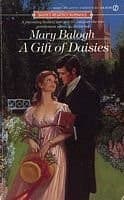
Synopsis
"Lady Rachel Palmer was quite used to men falling helplessly in love with her. Every gentleman in aristocratic society, including her devoted fiancé, Lord Algernon Rivers, fell a willing victim to Rachel's dazzling beauty and bewitching charm. Every gentleman, that is, except Lord Rivers' closest friend, the studiously unfashionable and splendidly handsome Mr. David Gower. Mr. Gower made it clear that the ravishing Rachel represented everything he scorned, and that he was the very last man in the world she could ever ensnare. It was a challenge Rachel could not ignore - from a man she could not resist..." -- Back cover.
Recommendations
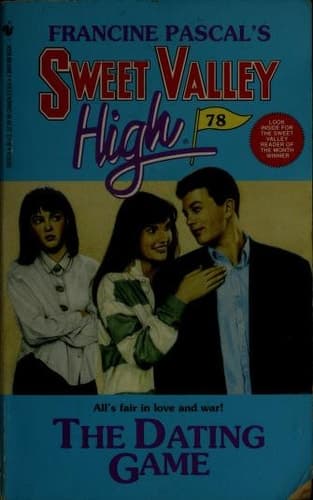
The Dating Game
by Kate William
Like Rachel and David, your protagonists here are locked in a battle of wills where mutual disdain masks something far more complicated. Thorne captures that same electric tension between two people who've decided they're enemies, then must confront why they can't stop thinking about each other—the banter has that same sharp, witty edge that makes their eventual shift feel earned rather than sudden.
View book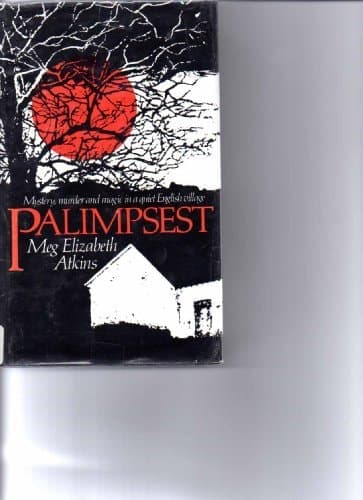
Palimpsest
by Meg Elizabeth Atkins
This is my surprise pick for you—it's technically magical realism rather than historical romance, but it shares something essential with Balogh's work: the idea that love fundamentally transforms how we see ourselves and the world. Valente writes about four strangers connected through a mysterious city that exists only in dreams, and the prose has that same lush, sensual quality you'd find in Balogh's descriptions of attraction and yearning, just applied to something far stranger.
View book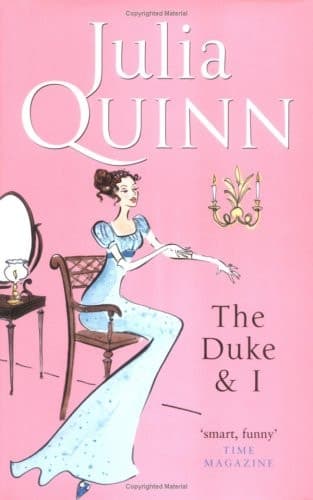
The Duke and I
by Julia Quinn
Quinn writes Regency romance with genuine wit and emotional depth—her Duke Simon has that same sardonic resistance to love that David Gower does, and watching him slowly realize his feelings for Daphne has the same satisfying arc of a man undone by someone he thought he could dismiss. The banter between them crackles in a way that feels like a conversation rather than scripted flirtation.
View book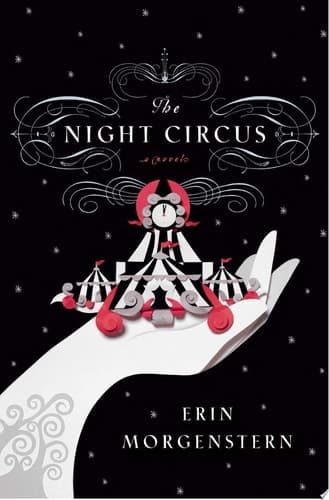
The Night Circus
by Erin Morgenstern
Published in 2011, this gives you something from a different era while maintaining that sense of two people drawn into an intimate contest they can't escape. Morgenstern weaves romance into a larger magical framework, but the core relationship between Celia and Marco has that same quality of two formidable people discovering they're each other's match—intellectually, emotionally, and in ways neither anticipated.
View book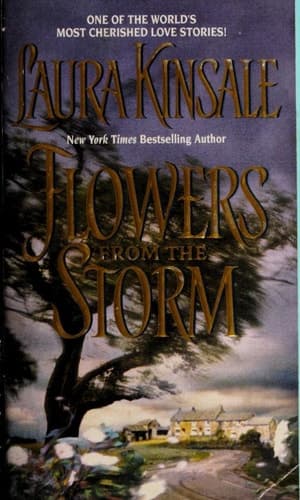
Flowers from the Storm
by Laura Kinsale
Kinsale writes historical romance with psychological complexity—her hero is a brilliant mathematician rendered unable to communicate clearly after a stroke, and her heroine is a Quaker woman who sees past his disability to the man beneath. Like Balogh, Kinsale refuses to let surface appearances (beauty, status, first impressions) determine her characters' worth, and she builds intimacy through genuine understanding rather than mere attraction.
View bookAbout Mary Balogh
M
Mary Balogh
Born 1944
Mary Jenkins was born on 1944 in Swansea, Wales, UK. After graduating from university, moved to Saskatchewan, Canada, to teach high-school English, on a two-year teaching contract in 1967. She married her Canadian husband, Robert Balogh, and had three children, Jacqueline, Christopher and Sian. When she's not writing, she enjoys reading, music and knitting. She also enjoys watching tennis and curling. Mary Balogh started writing in the evenings as a hobby. Her first book, a Regency love story, was published in 1985 as A Masked Deception under her married name. In 1988, she retired from teaching after 20 years to pursue her dream to write full-time. She has written more than seventy novels and almost thirty novellas since then, including the New York Times bestselling Slightly sextet and Simply quartet. She has won numerous awards, including Bestselling Historical of the Year from the Borders Group, and her novel Simply Magic was a finalist in the Quill Awards.
View author page