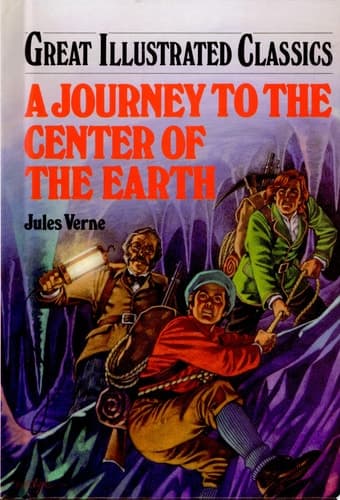
A Journey to the Center of the Earth
Jules VernePublished2002
Pages238
FormatLibrary Binding
PublisherABDO
Synopsis
For generations, readers have enjoyed classic literature. They have delighted in the romance of Jane Austen, thrilled at the adventures of Jules Verne, and pondered the lessons of Aesop. Introduce young readers to these familiar volumes with Great Illustrated Classics. In this series, literary masterworks have been adapted for young scholars. Large, easy-to-read type and charming pen-and-ink drawings enhance the text. Students are sure to enjoy becoming acquainted with traditional literature through these well-loved classics.
Recommendations
Generating recommendations…
Our AI is preparing recommendations for A Journey to the Center of the Earth. This usually takes under a minute.
About Jules Verne
J
Jules Verne
1828–1905
Jules Verne was a French author who helped pioneer the science-fiction genre. He is best known for his novels A Journey to the Centre of the Earth (1864), From the Earth to the Moon (1865), Twenty Thousand Leagues Under the Sea (1869–1870), Around the World in Eighty Days (1873) and The Mysterious Island (1875). Verne wrote about space, air, and underwater travel before navigable aircraft and practical submarines were invented, and before any means of space travel had been devised. Consequently he is often referred to as the "Father of science fiction", along with H. G. Wells. ([Source][1].) Also as of 2023, Jules Verne is regarded as the second most translated author in the world. ([Source][2].) [1]: http://en.wikipedia.org/wiki/Jules_Verne [2]: https://www.tomedes.com/translator-hub/most-translated-author.php
View author page