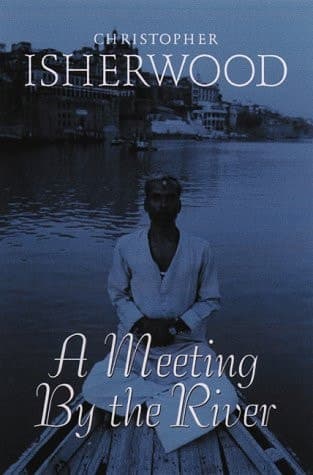
A Meeting by the River
Christopher IsherwoodPublished1999
Pages191
Formatpaperback
PublisherUniversity of Minnesota Press
Synopsis
'...uses a wealth of perspectives and case studies from archaeology and its related disciplines to delineate and assess the mechanisms of dominance and of its counterpart, resistance.'^ N - British ArchaeologyThe nature of power - one of the central concerns in social science - is the main theme of this wide-ranging book. Introducing a much broader historical and geographical comparative understanding of domination and resistance than is available elsewhere, the editors and contributors offer a wealth of perspectives and case studies. They illustrate the application of these ideas to issues as diverse as ritualized space, the nature of hierarchy in non-capitalist contexts and the production of archaeological discourse.Drawing on considerable experience in promoting interaction between archaeology and other disciplines concerned with ideology, power and social transformation, the editors have brought together a stimulating book that will be of widespread interest amongst students of archaeology, ancient history, sociology, anthropology and human geography.
Recommendations

The Interpretation Of Cultures
by Clifford Geertz
Geertz does for anthropology what your book does for archaeology—he builds a framework for understanding how power operates through cultural symbols and rituals. His essay on the Balinese cockfight is a masterclass in reading dominance and social hierarchy through seemingly ordinary practices, and you'll recognize the same interdisciplinary rigor and case-study methodology that made Isherwood's collection so compelling.
View book
The Savage Detectives A Novel
by Roberto Bolaño
Here's your surprise pick: this is a novel, not an academic text, but Bolaño structures his narrative like an archaeological excavation—fragmentary testimonies, competing perspectives, and the gradual revelation of how power and ideology shape a literary movement. It's messier and more playful than your last read, but it shares that same obsession with how dominance operates through discourse and how resistance gets written out of history.
View book
The Practice of Everyday Life
by Michel de Certeau
De Certeau examines how ordinary people resist and subvert institutional power through small, tactical acts—reading, cooking, walking through cities. It's the perfect complement to your book because while Isherwood's contributors map dominance structures, de Certeau shows you the creative ways people operate *within* those structures. His writing is more philosophical than archaeological, but the intellectual energy is equally infectious.
View book
Discipline and punish: the birth of the prison
by Michel Foucault
Published in 1975, this one predates your book by nearly a quarter-century, but it's foundational to everything Isherwood's contributors are building on. Foucault traces how power doesn't just oppress—it *produces* knowledge, bodies, and social order. If you found yourself wanting deeper theoretical grounding for the mechanisms of dominance discussed in the case studies, this is where that conversation began.
View book
What a Producer Does: The Art of Moviemaking (Not the Business)
by Buck Houghton
Scott studies hill peoples in Southeast Asia who've actively resisted state control for centuries—not through rebellion, but through geography, mobility, and deliberate cultural choices. He writes with the ethnographic detail of an anthropologist but the narrative drive of a historian, and his focus on *how* resistance actually works in practice gives you the ground-level view that complements the theoretical frameworks in your previous read.
View bookAbout Christopher Isherwood
C
Christopher Isherwood
1904–1986
Biography coming soon.
View author page