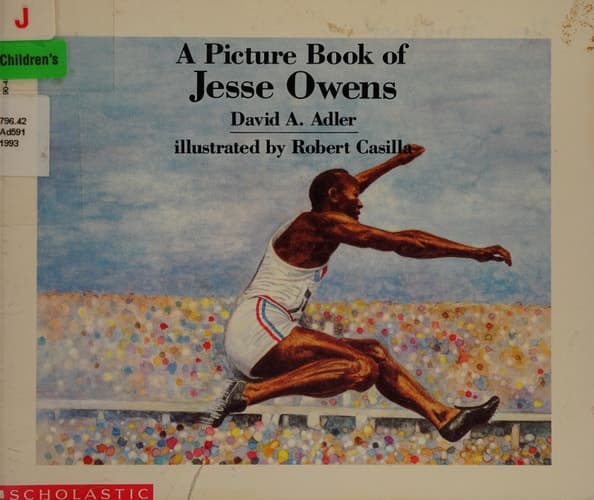
A Picture Book of Jesse Owens
David A. AdlerPublished1993
Pages32
Formatpaperback
PublisherScholastic Incorporated
Synopsis
A simple biography of the noted black track star who competed in the 1936 Berlin Olympics.
Recommendations
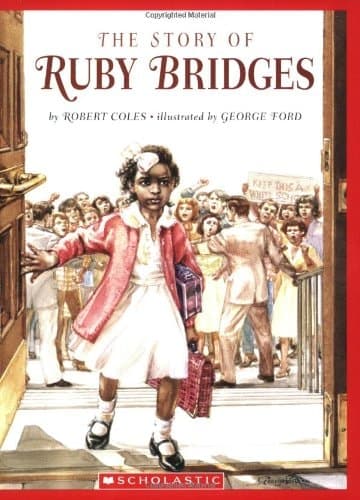
The Story of Ruby Bridges
by Robert Coles
Like Adler's Jesse Owens, Coles captures a pivotal moment when a young Black American broke barriers—in this case, integrating an all-white school in 1960. But where Adler focuses on athletic triumph, Coles zeroes in on the quiet courage of everyday resistance, letting Ruby's own voice and perspective shape the narrative in ways that feel more intimate and psychologically complex.
View book
Hidden Fires
by Sandra Brown
This expands the lens beyond a single athlete to show how Black women mathematicians were essential to NASA's success—it's the same era of American achievement, but Shetterly reveals the invisible architecture of discrimination that even Olympic glory couldn't dismantle. The narrative weaves between personal stories and historical forces in a way that makes the stakes feel both intimate and monumental.
View book
Alex Haley's The Autobiography of Malcolm X
by Anita J. Aboulafia
Here's your surprise pick: instead of another biography of a sports hero, sit with Malcolm X's own voice reflecting on identity, resistance, and what it meant to be Black in America during the same decades Owens was competing. It's rawer and more confrontational than Adler's measured biography, but it'll deepen your understanding of the historical moment that produced figures like Owens.
View book
Wilma Unlimited How Wilma Rudolph Became the World's Fastest Woman
by Kathleen Krull
Another Olympic track star, yes—but Rudolph's memoir (published in 1977) has a different texture than Adler's picture book. She writes about overcoming polio and segregation in the rural South with a directness that lets you feel the physical and emotional weight of her journey, not just the glory of the medal stand. It's from a different decade and gives you the athlete's own perspective rather than a biographer's interpretation.
View book
The Immortal Count The Life and Films of Bela Lugosi
by Arthur Lennig
This is another curveball: Skloot investigates how a Black woman's cells became invaluable to medical science without her knowledge or consent—it's about invisible contribution and exploitation, which mirrors the broader context of Owens' era. Where Owens' achievement was visible and celebrated (if still undervalued), Henrietta Lacks' contribution was literally stolen. Together, these books paint a fuller picture of Black American achievement and injustice.
View bookAbout David A. Adler
D
David A. Adler
Born 1947
American author of nearly 200 books for children and young adults, most notably the Cam Jansen mystery series, the "Picture Book of..." series, and several acclaimed works about the Holocaust for young readers.
View author page