Synopsis
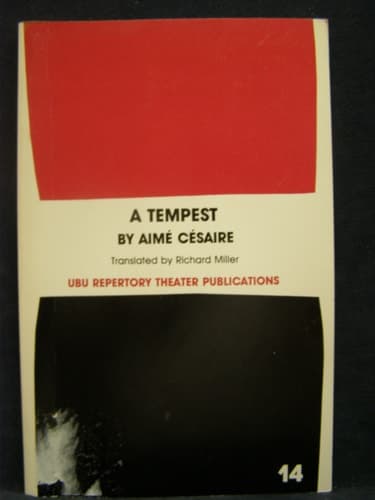
A troupe of black actors perform their own Tempest. The play explores the political and cultural conflicts opposing the white master, Prospero, his mulatto servant, Ariel, and the black slave Caliban. Csaire's rich and insightful adaptation draws on contemporary Caribbean society, the Afro-American experience and African mythology to raise questions about colonialism, racism, and their lasting effects. From Martinique. 3 acts. 4f, 14m.
Recommendations
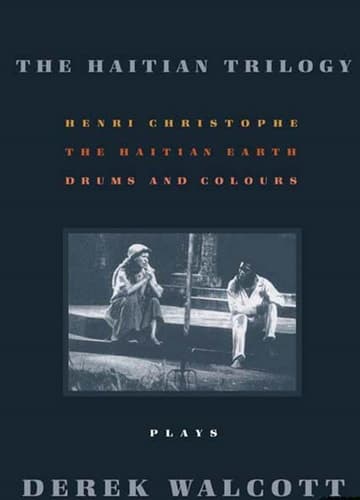
The Haitian Trilogy Plays: Henri Christophe, Drums and Colours, and The Haytian Earth
by Derek Walcott
Danticat shares Césaire's gift for weaving Caribbean history and colonialism into intimate human stories, but she approaches it through interconnected narratives that feel like overhearing conversations in a crowded room. Where A Tempest interrogates power structures directly through Shakespeare's framework, Danticat lets the weight of historical trauma emerge through the daily lives of her characters—you'll recognize the same unflinching examination of what colonialism costs, just told through whispered family secrets rather than theatrical confrontation.
View book
Ralph Ellison - Invisible Man
by Anke Balduf
Published in 1952, this novel predates A Tempest by four decades but speaks to the same core question: what happens to identity and agency when you're forced to perform a role others have written for you? Ellison's unnamed narrator navigates a landscape of competing masters and false promises much like Caliban does, but through the lens of mid-century American racism. The prose itself becomes a kind of performance—Ellison shifts tone and register constantly, mirroring how his protagonist must constantly code-switch.
View book
The Apocalyptic Vision of Mikhail Bulgakov's the Master and Margarita (Studies in Slavic Language & Literature)
by Edward E. Ericson
Here's the curveball: a 1960s Russian novel that's ostensibly about a devil loose in Soviet Moscow, but it's really about how those in power control narrative itself. Like Césaire, Bulgakov uses theatrical elements and multiple storylines to expose the absurdity of authoritarian systems, but he does it through magical realism and dark comedy rather than direct political argument. Both works understand that colonialism and totalitarianism operate partly through controlling who gets to tell the story—Bulgakov just makes you laugh while he's showing you the machinery.
View book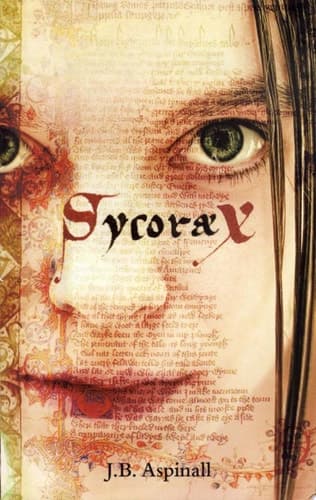
Sycorax
by J.B. Aspinall
This is a poetry and short fiction collection by Black women writers from the African diaspora—the title itself references Caliban's mother from The Tempest, so it's almost a direct conversation with Césaire's play. Where A Tempest gives you one powerful reinterpretation, this anthology offers dozens of voices reclaiming and reimagining colonial narratives from multiple angles. It's like watching the same story refracted through a prism rather than a single mirror.
View bookAbout Aimé Césaire
Biography coming soon.
View author page