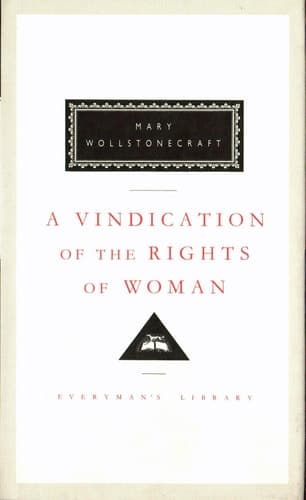
A Vindication of the Rights of Woman (Everyman's Library Classics)
Mary WollstonecraftPublished1992
Pages213
Formathardcover
PublisherEveryman's Library
Synopsis
Writing just after the French and American revolutions, Mary Wollstonecraft firmly established the demand for women’s emancipation in the context of the ever-widening urge for human rights and individual freedom that followed in the wake of these two great upheavals. She thereby opened the richest, most productive vein in feminist thought; and her success can be judged by the fact that her once radical polemic, through the efforts of the innumerable writers and activists she influenced, has become the accepted wisdom of the modern era. The present edition contains a substantial essay by a major scholar to celebrate the bicentenary of publication in 1792.
Recommendations
Generating recommendations…
Our AI is preparing recommendations for A Vindication of the Rights of Woman (Everyman's Library Classics). This usually takes under a minute.
About Mary Wollstonecraft
M
Mary Wollstonecraft
1759–1797
Mary Wollstonecraft (pronounced /ˈwʊlstən.krɑːft/; 27 April 1759 – 10 September 1797) was an eighteenth-century British writer, philosopher, and advocate of women's rights. During her brief career, she wrote novels, treatises, a travel narrative, a history of the French Revolution, a conduct book, and a children's book. Wollstonecraft is best known for *A Vindication of the Rights of Woman* (1792), in which she argues that women are not naturally inferior to men, but appear to be only because they lack education. She suggests that both men and women should be treated as rational beings and imagines a social order founded on reason.
View author page