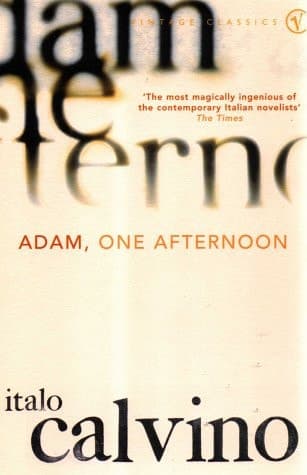
Synopsis
This collection of playful, deadly febles is populated with waifs and strays, a gluttonous thief and a mischievous gardener. The grimly comic story The Argentine Ant moved Gore Vidal to declare 'if this is not a masterpiece of twentieth-century prose writing, I cannot think of anything better'.
Recommendations
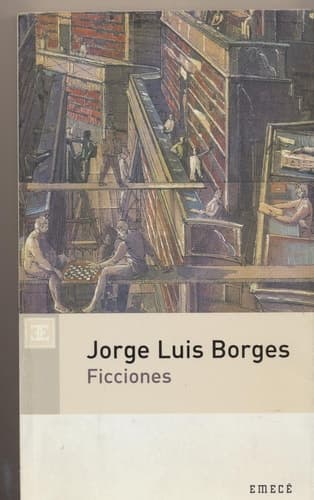
Ficciones
by Jorge Luis Borges
Like Calvino, Borges builds entire philosophical universes in miniature—his stories compress impossible ideas into a few pages with that same deadpan precision. Where Calvino's gardener and thief move through recognizable worlds gone slightly wrong, Borges creates worlds that operate on their own internal logic entirely, and you'll find yourself rereading sentences to catch the architecture underneath.
View book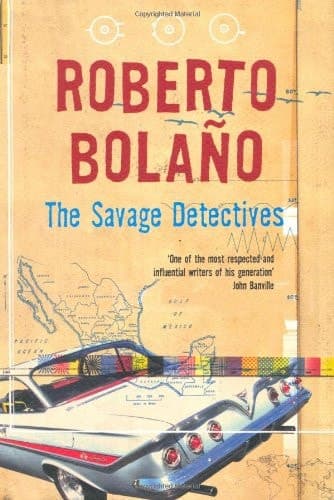
The Savage Detectives A Novel
by Roberto Bolaño
Bolaño shares Calvino's gift for populating stories with drifters and misfits who stumble through absurd situations, but he stretches that sensibility across 900 pages of controlled chaos. The novel moves between diary entries, interviews, and fragmented narratives the way Calvino's collection moves between stories—each section a different angle on the same fundamental human restlessness.
View book
The Apocalyptic Vision of Mikhail Bulgakov's the Master and Margarita (Studies in Slavic Language & Literature)
by Edward E. Ericson
This 1960s Soviet masterpiece has that same quality of grimly comic fables—a devil literally visits Moscow and chaos ensues—but Bulgakov layers in political allegory and philosophical questions about art and power. It's Calvino's playfulness meeting Dostoevsky's weight, and the structure (interweaving three different timelines) creates the same sense of stories commenting on each other that you get from a short story collection.
View book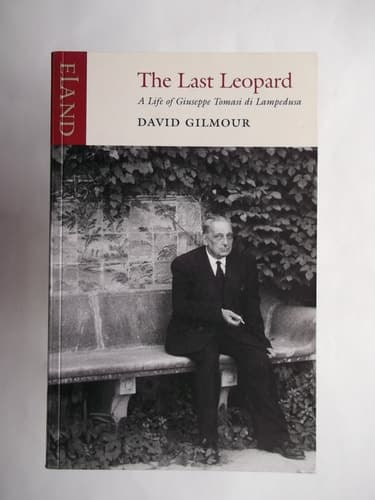
The Last Leopard: A Life of Giuseppe Tomasi di Lampedusa
by David Gilmour
A genuine surprise here, but stay with me: where Calvino writes quick, sharp observations about human nature, Lampedusa writes a single, slow-moving novel about a Sicilian prince watching his world change. Both authors share an almost anthropological eye—they watch how people actually behave when systems shift around them—but Lampedusa gives you the weight and sensuality that Calvino's brevity deliberately avoids. It's the complement to what you just read.
View book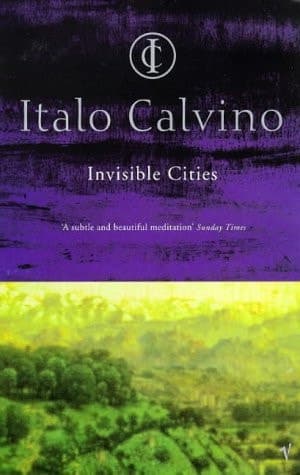
Invisible Cities
by Italo Calvino
I know—same author, but this is genuinely different from Adam, One Afternoon, and it's the natural next step in Calvino's work. Where the stories you just finished are grounded in recognizable (if warped) reality, Invisible Cities is pure architecture and imagination: Marco Polo describes impossible cities to Kublai Khan, and each description is a philosophical meditation. It's what happens when you take Calvino's playfulness and remove the last anchor to the physical world.
View bookAbout Italo Calvino
I
Italo Calvino
1923–1985
Italo Calvino (Santiago de Las Vegas de La Habana, 15 ottobre 1923 – Siena, 19 settembre 1985) è stato uno scrittore e paroliere italiano. Intellettuale di grande impegno politico, civile e culturale, è stato uno dei narratori italiani più importanti del secondo Novecento. I numerosi campi d'interesse toccati dal suo percorso letterario sono meditati e raccontati attraverso capolavori quali la trilogia de *I nostri antenati, Marcovaldo, Le cosmicomiche, Se una notte d'inverno un viaggiatore,* uniti dal filo conduttore della riflessione sulla storia e la società contemporanea. ---------- Italo Calvino (Italian: [ˈiːtalo kalˈviːno]; 15 October 1923 – 19 September 1985) was an Italian journalist and writer of short stories and novels. His best known works include the *Our Ancestors* trilogy (1952–1959), the *Cosmicomics* collection of short stories (1965), and the novels *Invisible Cities* (1972) and If on a winter's night a traveler (1979). Lionised in Britain and the United States, he was the most-translated contemporary Italian writer at the time of his death, and a noted contender for the Nobel Prize for Literature.
View author page