Synopsis
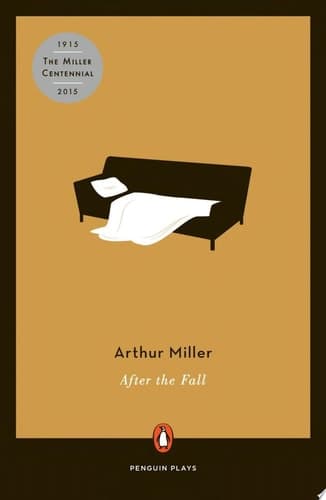
Often called the most autobiographical of Arthur Miller's plays, After the Fall probes deeply into the psyche of Quentin, a man who ruthlessly revisits his past to explain the catastrophe that is his life. His journey backward takes him through a troubled upbringing, the bitter death of his mother, and a series of failed relationships.
Recommendations

Ralph Ellison - Invisible Man
by Anke Balduf
Like Quentin's excavation of his own complicity in his failures, Ellison's narrator must confront how he's internalized the world's distorted image of him—but Ellison adds a layer Miller doesn't quite reach: the social machinery that manufactures self-deception. Both men are unreliable witnesses to their own lives, but Ellison shows us how that unreliability is almost inevitable, almost tragic.
View book
The remains of the day de Kazuo Ishiguro
by Gallix/François
Stevens, like Quentin, is a man arriving at late middle age realizing his entire life has been constructed on a foundation of self-deception—but where Miller's protagonist is frantically searching backward, Ishiguro's is taking a quiet, almost unbearably controlled journey toward the same recognition. The restraint of Ishiguro's prose makes the emotional devastation hit harder precisely because it's never stated outright.
View book
Reading Marilynne Robinson's Housekeeping (Boise State University Western Writers Series)
by James H. Maguire
This is the surprise pick—it reads almost like a ghost story, but it's really about how we inherit damage and confusion from our families and mistake it for love or loyalty. Robinson writes with the precision of a playwright about domestic life, and like Miller, she's interested in how we rationalize the irrational choices of those we're bound to. The prose is luminous where Miller is stark, but the emotional archaeology is remarkably similar.
View book
Find what the Sailor Has Hidden Vladimir Nabokov's Pale Fire
by Priscilla Meyer
If you found yourself questioning Quentin's version of events, Nabokov will make you *obsess* over it. This novel is structured as a poem with a commentary by an unreliable scholar, and the entire book becomes a meditation on how we construct narratives about ourselves and others—how the act of telling becomes a kind of madness. It's playful where Miller is earnest, but equally devastating about human self-knowledge.
View book
The Savage Detectives A Novel
by Roberto Bolaño
Published in 1998, this sprawling novel follows a group of poets and drifters through Mexico and Europe, told through fragmented perspectives and diaries—it's Miller's psychological intensity applied to a whole generation of men trying to outrun their own emptiness. Bolaño captures that same desperate searching for meaning through relationships and art, but he's willing to let the search itself become the point, rather than demanding resolution.
View bookAbout Arthur Miller
A
Arthur Miller
1915–2005
Arthur Asher Miller was an American playwright, essayist and screenwriter in the 20th-century American theater. Among his most popular plays are All My Sons (1947), Death of a Salesman (1949), The Crucible (1953), and A View from the Bridge (1955). He wrote several screenplays and was most noted for his work on The Misfits (1961). The drama Death of a Salesman is considered one of the best American plays of the 20th century.
View author page