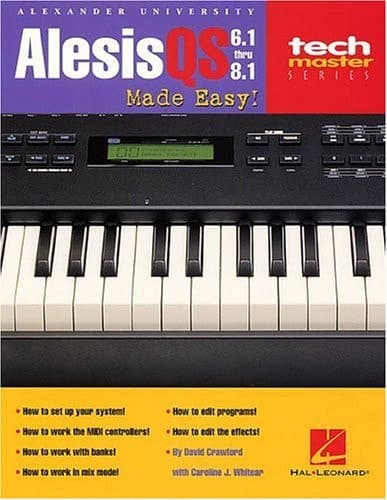
Alesis QS Made Easy! 6.1 Thru 8.1
David CrawfordPublished2001
Pages184
Formatpaperback
PublisherBloomsbury Academic
Synopsis
This new book reviewed and authorized by Alesis Corporation will help you master the QS Keyboard, 6.1 thru 8.1! It contains information-packed chapters written using a simple “do this, do that” approach that gets you performing and recording with the QS MIDI keyboard quickly. Topics covered include: set up • connections with the back panel • banks and how they're organized • saving sounds to the user bank and PCMIA cards • mix mode • panning and setting levels within the QS mix • MIDI control changes • live performing and sequencing • using the QS as a MIDI controller with a slave device • editing programs, sounds, voices and effects • creating custom drum sets • reinitializing the QS • and much more!
Recommendations

The Art of Writing Music A Practical Book for Composers and Arrangers of Instrumental, Choral, and Electronic Music as Applied to Publication, Films, Television, Recordings, and Schools
by John Cacavas
You've clearly got the hands-on technical mindset that Crawford taps into—this book takes that same methodical, demystifying approach but zooms out to show you the *why* behind synthesizer design and electronic music history. It's the conceptual companion to your QS manual, giving you the theoretical framework that makes those parameter adjustments actually meaningful.
View book
MIDI Power!
by Robert Guérin
Since you've already tackled MIDI control changes on the QS, Guérin's book expands that knowledge across an entire ecosystem of devices and software—it's written in that same practical, step-by-step style but shows you how to think about MIDI as a language rather than just a feature. You'll recognize Crawford's teaching method immediately, which means you can focus on absorbing genuinely new material.
View book
Just a Geek
by Wheaton, Wil
Here's the curveball: this is a memoir about obsession, technical tinkering, and the joy of mastering complex systems—but it's told through personal essays rather than instruction. If you loved the satisfaction of working through Crawford's chapters and actually *getting* the QS to do what you wanted, you'll recognize that same feeling of accomplishment in Wheaton's stories about diving deep into technology and fandom. It's proof that the technical mind and the storytelling mind aren't opposites.
View book
Synthesizer Basics
by Brent Hurtig
White writes with the same clarity Crawford brings to the QS manual, but he's tackling the universal principles of synthesis itself—oscillators, filters, envelopes, LFOs. You'll immediately see how the QS's architecture fits into the larger world of synthesis design, and you'll be able to edit those programs with real understanding rather than just following instructions.
View book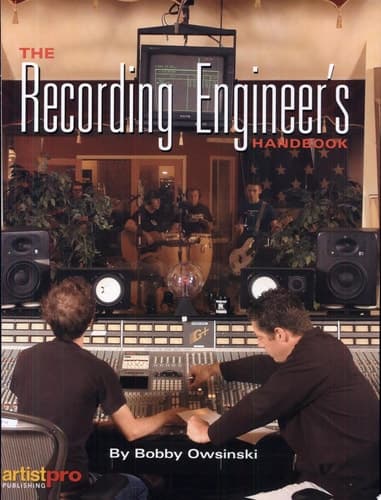
The Recording Engineer's Handbook
by Bobby Owsinski
You've learned to sequence and perform with the QS; now learn what to do with what you've created. Owsinski's handbook is packed with the same practical, no-nonsense approach as Crawford's manual, but it covers the recording and mixing side—how to actually capture and shape those sounds you've been programming. It's the natural next step for someone who's already comfortable with the technical side of music production.
View bookAbout David Crawford
D
David Crawford
Born 1951
Biography coming soon.
View author page