Synopsis
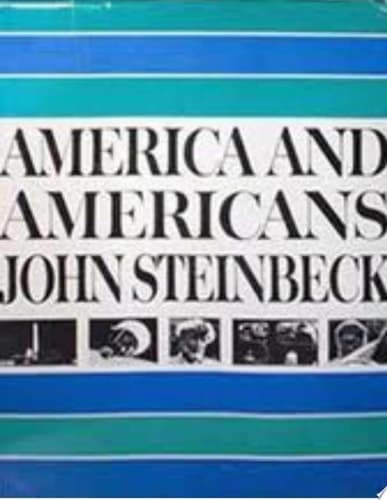
The author offers his opinions on life in America during the mid-twentieth century.
Recommendations
The Grapes of Wrath John Steinbeck
by John Steinbeck
Wait—I know what you're thinking. But hear me out: if you connected with Steinbeck's sharp-eyed social commentary in *America and Americans*, his 1939 novel gives you that same unflinching gaze at American inequality, except he's embedded it in narrative rather than essay form. The way he moves between individual family struggles and systemic economic collapse mirrors how his non-fiction analyzes the country—personal stories as evidence of larger truths.
View book
Ralph Ellison - Invisible Man
by Anke Balduf
Ellison does something Steinbeck gestures toward but never fully explores in *America and Americans*—he interrogates what it means to be American when the country systematically refuses to see you. Published in 1952, this novel is essentially a rebuttal to mid-century American mythology, using a nameless protagonist's journey through Harlem and beyond to expose the gap between America's self-image and its reality. It's the literary equivalent of the hard truths Steinbeck was articulating in his essays.
View book
The Right Stuff
by Tom Wolfe
Wolfe channels Steinbeck's ability to observe American character and mythology, but he's writing about the space program and test pilots in the 1960s—exactly the moment when Steinbeck was writing *America and Americans*. What makes this work for you is Wolfe's technique: he's doing what Steinbeck does, which is watching Americans perform their identity, but he's doing it with novelistic flair and a satirist's eye. You'll recognize the same fascination with what Americans *think* they are versus what they actually are.
View book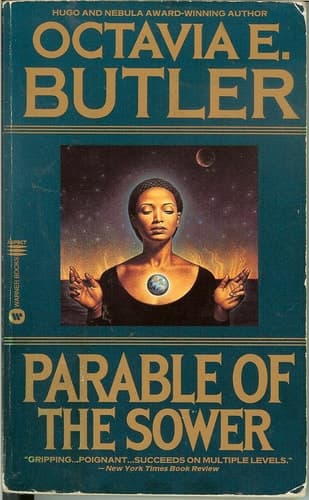
Parable of the Sower
by Octavia E. Butler
Here's your genre surprise: Butler writes science fiction, but *Parable of the Sower* (1993) is really a meditation on American fragmentation and inequality—themes Steinbeck was wrestling with in the 1960s. She imagines a near-future where America has fractured along economic and social lines, and she explores it through a young Black woman's perspective that Steinbeck's generation rarely centered. It's speculative, yes, but it's asking the same hard questions about whether America's promises actually hold.
View bookAbout John Steinbeck
J
John Steinbeck
1902–1968
John Steinbeck was an American writer. He wrote the Pulitzer Prize-winning novel *The Grapes of Wrath* (1939) and the novella *Of Mice and Men* (1937). He wrote a total of 27 books, including 16 novels, six non-fiction books, and five collections of short stories. In 1962, Steinbeck received the Nobel Prize for Literature ([Source][1]). [1]:https://en.wikipedia.org/wiki/John_Steinbeck
View author page