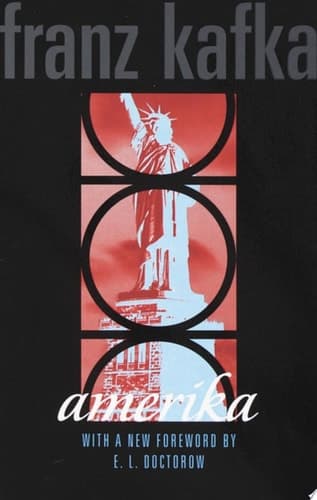
Synopsis
Translated by Willa and Edwin Muir
Foreword by E. L. Doctorow
Afterword by Max Brod
Kafka's first and funniest novel, "Amerika" tells the story of the young immigrant Karl Rossmann who, after an embarrassing sexual misadventure, finds himself "packed off to America" by his parents. Expected to redeem himself in this magical land of opportunity, young Karl is swept up instead in a whirlwind of dizzying reversals, strange escapades, and picaresque adventures.
Although Kafka never visited America, images of its vast landscape, dangers, and opportunities inspired this saga of the "golden land." Here is a startlingly modern, fantastic and visionary tale of America "as a place no one has yet seen, in a historical period that can't be identified," writes E. L. Doctorow in his new foreword. "Kafka made his novel from his own mind's mythic elements," Doctorow explains, "and the research data that caught his eye were bent like rays in a field of gravity."
Recommendations
The Trial
by Franz Kafka
I know—same author, but hear me out. If you found yourself laughing at the absurd logic of Amerika's bureaucratic tangles, The Trial takes that Kafkaesque nightmare and makes it even more claustrophobic and darkly comic. Where Karl experiences America's bewildering chaos from the outside, Josef K. is trapped within a legal system that operates by its own incomprehensible rules—and Kafka's control of tone here is masterful, oscillating between mundane office scenes and existential dread.
View book
The Confidence-Man His Masquerade
by Herman Melville
Published in 1857, this is your bridge to 19th-century American literature that Kafka himself was reading. Melville's novel is a picaresque journey down the Mississippi with a cast of con artists, dupes, and morally ambiguous characters—much like Karl's encounters with the Stoker, the Head Clerk, and various swindlers. Both novels use America as a stage for exploring how easily people are manipulated and how the 'land of opportunity' can be a hall of mirrors.
View book
If on a Winter's Night a Traveler Introduction by Peter Washington
by Italo Calvino
Calvino shares Kafka's playfulness with form and his fascination with how readers navigate impossible situations—but where Kafka traps you in Karl's perspective, Calvino makes you the protagonist of a novel that constantly shifts beneath your feet. You'll recognize the same dizzying reversals and strange escapades, but filtered through a postmodern sensibility that's almost giddy about narrative instability. It's like Amerika remixed by someone who thinks the confusion is delightful rather than merely nightmarish.
View book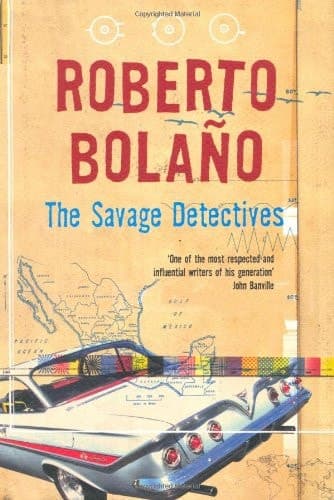
The Savage Detectives A Novel
by Roberto Bolaño
This is a genuine risk—it's long, structurally unconventional, and demands active reading—but Bolaño captures something essential about Kafka's vision: young men adrift in a vast, indifferent world, pursuing something (redemption? meaning? the perfect poem?) that keeps slipping away. The novel's middle section, told through fragmented testimonies, has that same picaresque quality as Karl's adventures, but Bolaño adds a melancholic intelligence about how idealism collides with reality. It's Amerika for readers who want their disorientation laced with genuine pathos.
View bookAbout Franz Kafka
F
Franz Kafka
1883–1924
Franz Kafka (gelegentlich tschechisch František Kafka, 3. Juli 1883, Prag, Österreich-Ungarn-3. Juni 1924, Kierling, Österreich) war ein österreichisch-tschechoslowakischer Schriftsteller. Er gilt als einer der bedeutendsten Vertreter der Prager deutschen Literatur und der deutschsprachigen Literatur des 20. Jahrhunderts. Seine Werke – darunter die drei Romanfragmente *Der Process, Das Schloss* und *Der Verschollene* sowie zahlreiche Erzählungen – gehören zum Kanon der Weltliteratur. Kafkas Werke wurden zum größeren Teil erst nach seinem Tod und gegen seine letztwillige Verfügung von Max Brod veröffentlicht, einem engen Freund und Vertrauten, den Kafka zu seinem Nachlassverwalter bestimmt hatte. Kafkas Schilderungen unergründlich bedrohlicher, absurder Situationen haben zur Bildung des auch im außerliterarischen Kontext verwendeten Adjektivs „kafkaesk“ geführt. ---------- Franz Kafka (3 July 1883 – 3 June 1924) was a German-language Jewish Czech writer and novelist born in Prague, in the Austro-Hungarian Empire. Widely regarded as a major figure of 20th-century literature, his work fuses elements of realism and the fantastique, and typically features isolated protagonists facing bizarre or surreal predicaments and incomprehensible socio-bureaucratic powers. The term Kafkaesque has entered the lexicon to describe situations like those depicted in his writings. His best-known works include the novella *The Metamorphosis* (1915) and the novels *The Trial* (1924) and *The Castle* (1926). His work has widely influenced artists, philosophers, composers, filmmakers, literary historians, religious scholars, and cultural theorists. ([Source][1].) [1]:https://en.wikipedia.org/wiki/Franz_Kafka
View author page