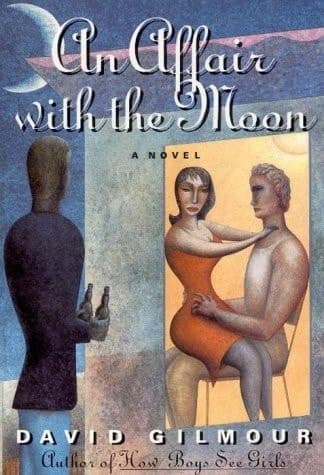
An Affair with the Moon
David GilmourPublished1993
Pages201
Formatpaperback
PublisherRandom House of Canada
Synopsis
In his first two novels David Gilmour took a candid look at romantic and carnal love. With this newest work he makes a surprising departure and turns his attention to a different kind of love.
"He was a bad dog that needed killing." That's how the grisly death of Pascal Charleville was described to police after a weekend visit at the country estate of Harrow Winncup took a nasty turn. Few people were surprised: Harrow had been courting tragedy for years. He was a bright, beautiful boy with a penchant for strong booze and drugs; he also had the unfortunate fate of being the only son to a very wicked mother.
Also at the house that weekend was Christian Blackwood. He and Harrow grew up together, went to Paris together, drank together, went out with girls together, and decided what to do with Pascal Charleville's body together. An Affair with the Moon is ultimately the story of their relationship--and its astonishing aftermath. It is a story of how one friend turned the others tragedy into his advanta≥ it is a story of friendship, but it is also a story of revenge.
Recommendations

Donna Tartt's The Secret History A Reader's Guide
by Tracy Hargreaves
Like Gilmour, Tartt constructs a narrative around a central act of violence that binds a small group of privileged men together, then slowly peels back the layers of complicity and moral compromise. Both novels are less interested in the crime itself than in how friendship becomes a kind of conspiracy—how loyalty can curdle into something darker and more complicated than simple guilt.
View book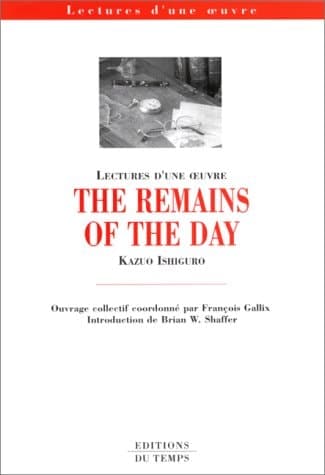
The remains of the day de Kazuo Ishiguro
by Gallix/François
Ishiguro does something Gilmour also masters: he lets you watch a character rationalize his own complicity in real time. The butler's careful, controlled voice mirrors how Gilmour's narration reveals betrayal through what's *not* quite said—both writers understand that the most devastating admissions come wrapped in politeness and self-deception.
View book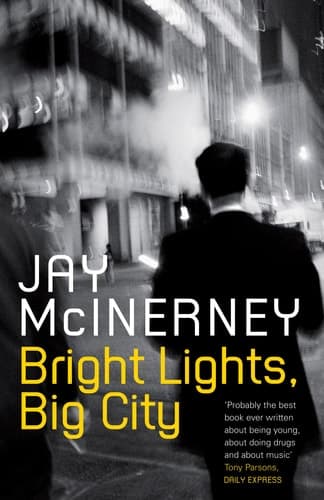
Bright Lights, Big City
by Jay McInerney
McInerney captures that same intoxicated haze of privilege and self-destruction that defines Harrow's world—the cocaine-fueled nights, the beautiful people making terrible choices, the way excess becomes a kind of emotional anesthetic. But where Gilmour examines friendship's aftermath, McInerney shows you the spiral itself, the moment-to-moment seduction of a life coming apart.
View book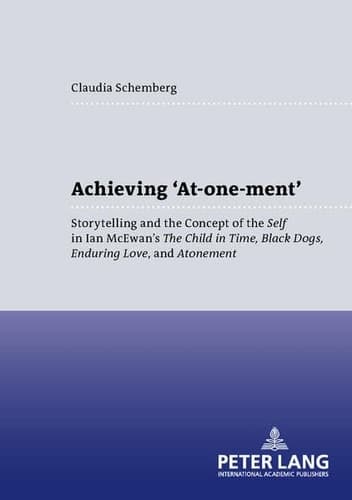
Achieving "at-one-ment" Storytelling and the Concept of the Self in Ian McEwan's The Child in Time, Black Dogs, Enduring Love, and Atonement
by Claudia Schemberg
Here's your surprise pick: McEwan weaves a love story through the same machinery of betrayal and consequence that drives *An Affair with the Moon*. A single act of misunderstanding—or is it malice?—ripples across decades, and like Gilmour, McEwan makes you question whether the narrator is confessing or justifying. The prose is more lyrical, but the emotional architecture is remarkably similar.
View book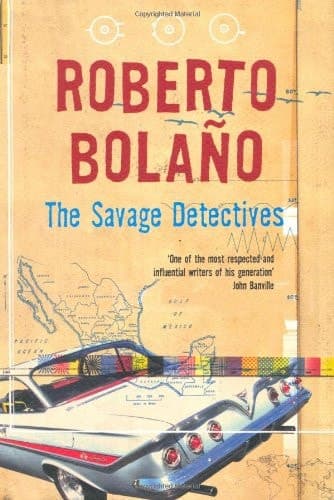
The Savage Detectives A Novel
by Roberto Bolaño
A departure in style, but thematically it's a masterwork about male friendship, artistic ambition, and how two people can share a life while remaining fundamentally unknowable to each other. Bolaño's novel sprawls across decades and continents, but at its core is that same question Gilmour asks: what does it mean to be complicit in someone else's self-destruction? The intimacy between the detectives has that same dangerous, codependent quality.
View bookAbout David Gilmour
D
David Gilmour
Born 1952
Biography coming soon.
View author page