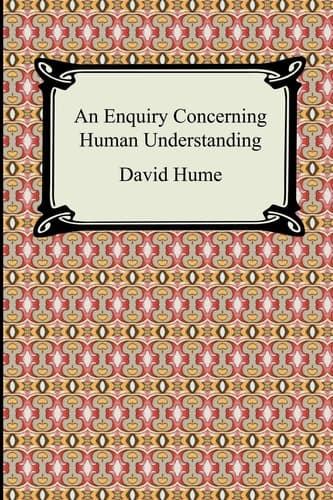
An Enquiry Concerning Human Understanding
David HumePublished2006
Pages96
Formatpaperback
PublisherDigireads.com
Synopsis
Philosopher David Hume was considered to one of the most important figures in the age of Scottish enlightenment. In "An Enquiry Concerning Human Understanding" Hume discusses the weakness that humans have in their abilities to comprehend the world around them, what is referred to in the title as human understanding. This work, now commonly required reading in philosophy classes, exposed a broad audience to philosophy when it was first published. A great introduction to the philosophy of David Hume, "An Enquiry Concerning Human Understanding" and the ideas within it are as intriguing today as when they were first written.
Recommendations
Generating recommendations…
Our AI is preparing recommendations for An Enquiry Concerning Human Understanding. This usually takes under a minute.
About David Hume
D
David Hume
1711–1776
David Hume (7 May 1711 [26 April O.S.] – 25 August 1776) was a Scottish philosopher, historian, economist, and essayist, known especially for his philosophical empiricism and skepticism. He is regarded as one of the most important figures in the history of Western philosophy and the Scottish Enlightenment. Hume is often grouped with John Locke, George Berkeley, and a handful of others as a British Empiricist. Source: [English Wikipedia][1] [1]: http://en.wikipedia.org/wiki/David_Hume
View author page