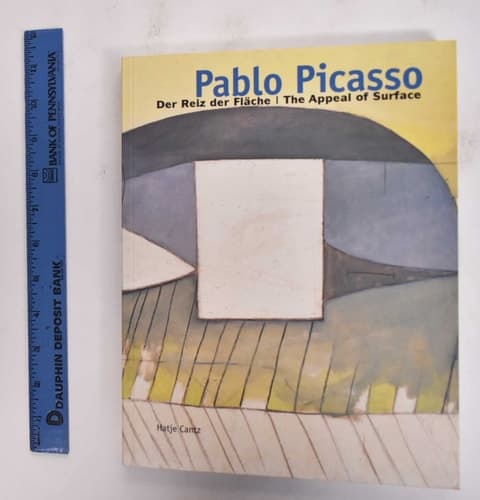
Appeal of surface
Pablo PicassoPublished1999
Pages191
Formatpaperback
PublisherDistributed Art Pub Incorporated
Synopsis
In the course of an extraordinary career driven by his virtually inexhaustible vitality and his ceaseless quest for renewal in his own work, Pablo Picasso brought forth an unusually extensive body of art. This book is not conceived as a survey of that ceuvre, but focuses instead upon Picasso the innovator. In each of the works selected, which together represent all of the artist's creative phases, from Cubism to abstraction to his late work in sculpture, the "appeal of surface" occupies the center of attention. The paintings, drawings, sculptures, and ceramics included bear witness to Picasso's intense concern with materials and their formal translation into surface area, color, and line. These works tell us a great deal about the fundamental principles of his working approach, the structure of his visual imagery, and the conceptual impulses that underlie his art. This handsomely designed catalogue includes five essays examining his work in various mediums and genres, a biography and bibliography, an essay exploring the similarities between Duchamp and Picasso, and a section of photographs by Edward Quinn, capturing the artist at work and play.
Recommendations
Generating recommendations…
Our AI is preparing recommendations for Appeal of surface. This usually takes under a minute.
About Pablo Picasso
P
Pablo Picasso
1881–1973
Picasso was a Spanish painter, draughtsman, and sculptor. He is one of the most recognized figures in 20th-century art. Among his most famous works are the proto-Cubist Les Demoiselles d'Avignon (1907) and Guernica (1937), his portrayal of the German bombing of Guernica during the Spanish Civil War.
View author page