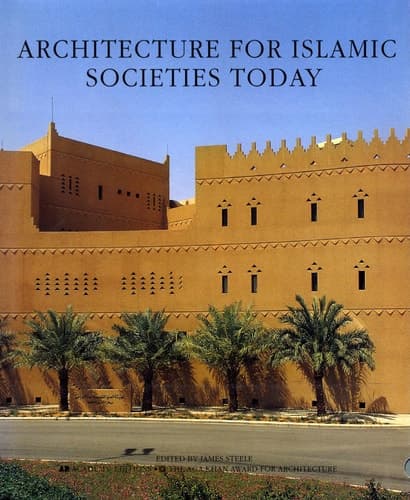
Architecture for Islamic Societies Today
James SteelePublished1994
Pages152
Formathardcover
PublisherWiley
Synopsis
Since the Aga Khan Award for Architecture was begun in 1977 it has been in the forefront of recognising the full impact of social and environmental upheaval on the built environment in Third World countries.
Recommendations
A Pattern Language Towns, Buildings, Construction
by Christopher Alexander
Alexander's work shares Steele's conviction that architecture isn't decorative but fundamentally shapes how communities function and adapt. Where Steele examines how the built environment responds to social upheaval in the developing world, Alexander provides a philosophical framework for understanding *why* certain spatial patterns work across cultures—it's the theoretical backbone that makes Steele's case studies resonate even more deeply.
View book
The Death and Life of Great American Cities
by Jane Jacobs
Published in 1961, this is your deeper-into-the-past recommendation, and it's essential reading for anyone who cares about how cities actually *work* versus how planners think they should. Jacobs dismantles top-down urban design with the same critical eye Steele brings to examining whether contemporary architecture truly serves the communities it's built for—she's asking the same urgent questions, just about American neighborhoods instead of Third World contexts.
View book
The Shock Doctrine The Rise of Disaster Capitalism
by Naomi Klein
Here's your genre-leap: Klein writes political economy and journalism, not architecture, but she's documenting the *exact same upheaval* Steele photographs and analyzes—how crises reshape societies and who gets to decide what gets built in the aftermath. Reading this alongside Steele transforms his architectural case studies into evidence for Klein's larger argument about power and reconstruction, making you see the buildings as political choices, not just aesthetic ones.
View book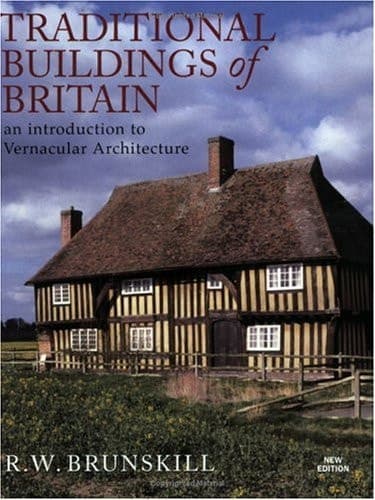
Traditional Buildings of Britain An Introduction to Vernacular Architecture and Its Revival
by Unknown
Oliver approaches architecture from the ground up—literally studying how ordinary people build shelter that responds to climate, materials, and culture—whereas Steele often examines award-winning contemporary projects. Together they create a complete picture: Oliver shows you what architecture *emerges* from communities, and Steele shows you what happens when architects *intervene* thoughtfully in those same contexts.
View book
The Right to the City Social Justice and the Fight for Public Space
by Don Mitchell
Harvey writes as a geographer and Marxist theorist, not an architect, but he's asking the question underneath all of Steele's work: *who decides what gets built, and for whom?* His essay collection reframes urban space as a site of justice and struggle, which means when you return to Steele's photographs of schools and housing in the developing world, you'll read them as evidence in a larger argument about rights, access, and whose vision of 'development' actually gets built.
View bookAbout James Steele
J
James Steele
Born 1943
Biography coming soon.
View author page