
Armes Miraculeuses (Poesie/Gallimard) (French Edition)
Aimé CésairePublished1970
Pages160
FormatPocket Book
PublisherGallimard Education
Synopsis
Hard to Find book
Recommendations
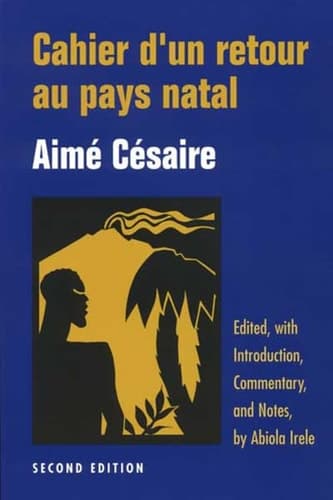
Cahier d'un Retour au Pays Natal (2nd edition) (English and French Edition)
by Aime Cesaire
Wait—I know you've just finished Césaire, but this is his foundational work that *Armes Miraculeuses* builds upon and extends. Where *Armes* channels rage into crystalline, weaponized imagery, this earlier notebook-poem shows you the raw material of his thought, the moment negritude crystallized into philosophy. Reading them in reverse order lets you see how his vision matured.
View book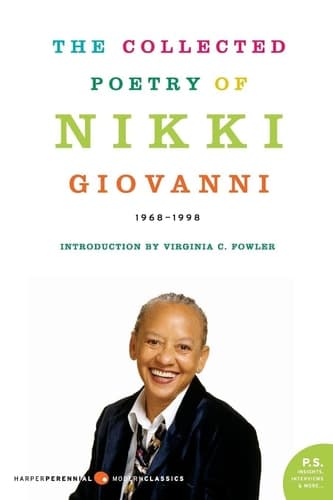
The Collected Poetry of Nikki Giovanni: 1968-1998 (Harper Perennial Modern Classics)
by Nikki Giovanni
Hughes shares Césaire's gift for making vernacular speech sing with political urgency, but where Césaire's language is baroque and incantatory, Hughes writes with the rhythms of jazz and the blues embedded in his lines. You'll recognize the same project—reclaiming Black voice as a source of power—but executed through an entirely different sonic landscape that feels both more accessible and more deceptively simple than it is.
View book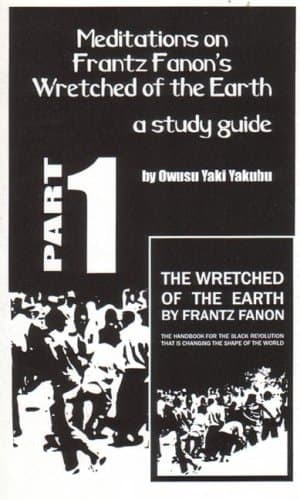
Meditations on Frantz Fanon's Wretched of the Earth, Part One A Study Guide
by Owusu Yaki Yakubu
This is the philosophical companion piece to what Césaire was doing poetically—Fanon takes the rage and the analysis of colonialism that pulses through *Armes Miraculeuses* and builds a systematic argument about violence, liberation, and the psychology of the colonized. It's prose, not poetry, but the intellectual electricity is the same, and you'll find passages that read like they're in direct conversation with Césaire's imagery.
View book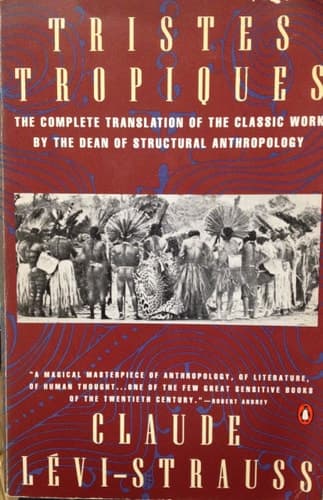
Tristes Tropiques
by Unknown
A genuine surprise: Aimé's wife was a brilliant essayist and editor who shaped surrealism's engagement with the Caribbean and Black thought. Her writing has the same incandescent quality as *Armes Miraculeuses*—that sense of language as a tool for unveiling hidden realities—but she approaches it through cultural criticism and the visual arts rather than pure lyric. It's a different genre entirely, but the sensibility is kindred.
View book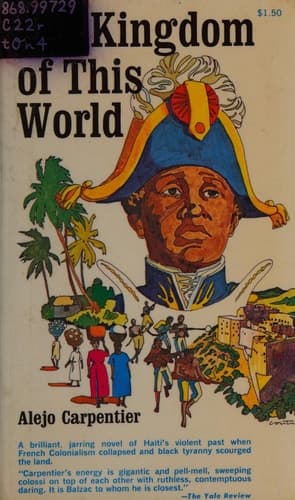
The Kingdom of This World: A Novel
by Alejo Carpentier
Carpentier's novel does something formally that echoes what Césaire achieves in poetry: it uses baroque, densely layered prose to capture the texture of Caribbean history and the Haitian Revolution, treating magical realism not as fantasy but as a way of representing a reality too extraordinary for conventional realism. Published in 1949, it's from a different decade and genre, but it's wrestling with the same historical wounds and the same question of how language can contain the uncontainable.
View bookAbout Aimé Césaire
Biography coming soon.
View author page