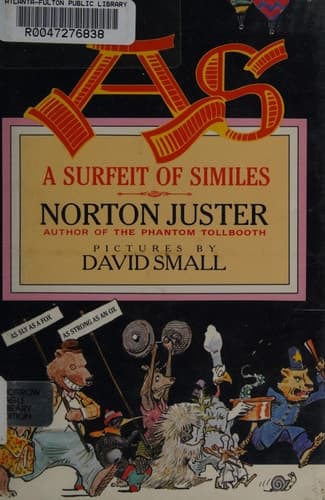
Synopsis
In verse that is as bright as a penny, Juster has stirred up a storm of similes, and Small has brilliantly captured them all. It's as much fun as a barrel of monkeys.
Recommendations
The Phantom Tollbooth
by Norton Juster
Wait—I know what you're thinking. But hear me out: if you haven't read Juster's masterpiece yet, this is the natural next step. Where *A Surfeit of Similes* celebrates language through pure poetic play, *The Phantom Tollbooth* builds an entire world where wordplay and linguistic puzzles ARE the adventure itself. It's the same author's philosophy expanded into a full narrative journey.
View book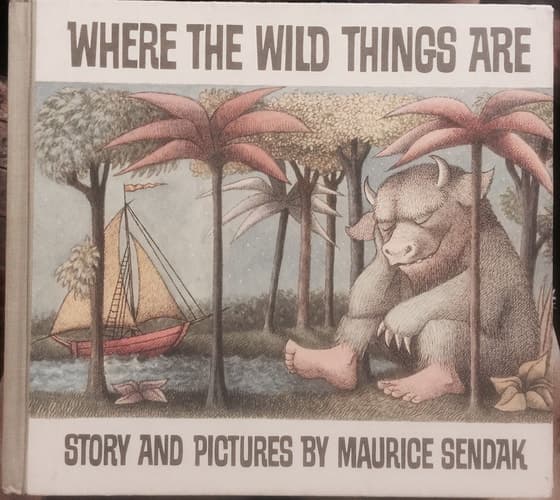
Where the Wild Things Are Holiday Feature Edition
by Maurice Sendak
Sendak's illustrations work exactly like Small's do in your book—they don't just decorate the words, they complete the emotional landscape. Both books understand that rhythm and repetition in language create a kind of music, and both trust young readers to appreciate sophisticated artistry without dumbing anything down.
View book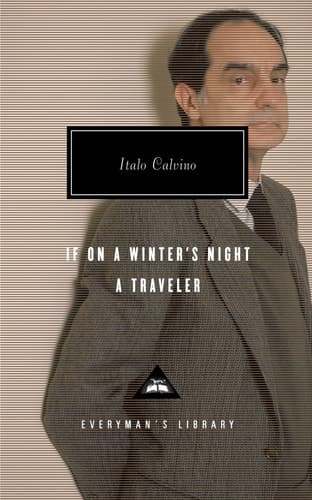
If on a Winter's Night a Traveler Introduction by Peter Washington
by Italo Calvino
This is my surprise pick for you—a 1979 metafictional novel that plays with language and form the way your book plays with similes. Calvino writes sentences that twist back on themselves, creating a reading experience that's playful and intellectually delightful. It's less children's verse and more experimental fiction, but the DNA is there: both celebrate the sheer joy of how words can surprise us.
View book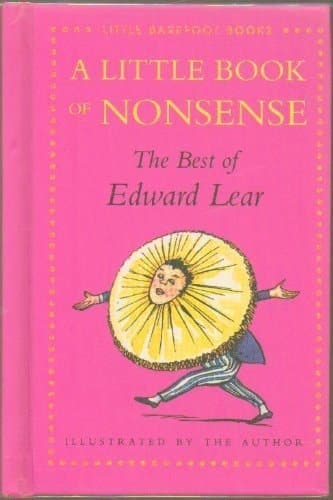
Little Book of Nonsense The Best of Edward Lear
by Edward Lear
Published in 1846, this collection is the ancestor of everything Juster does with language. Lear invented nonsense verse as a literary form, and his limericks and longer poems have that same bright, impossible logic that makes *A Surfeit of Similes* so infectious. If you love Juster's similes, you'll recognize Lear as the godparent of that tradition.
View book
The Fortunate Fall of Sir Gawain The Typology of Sir Gawain and the Green Knight
by Victor Yelverton Haines
Gaiman channels the same spirit as Juster here—a deceptively simple premise (where did the milk go?) becomes an excuse for wild imaginative riffing and absurdist humor. The illustrations by Skottie Young complement the text the way Small's do, and there's that same sense that language itself is the playground where the real adventure happens.
View bookAbout Norton Juster
N
Norton Juster
Born 1929
Norton Juster is an architect and planner, professor emeritus of design at Hampshire College, and the author of a number of highly acclaimed children's books, including The Dot and the Line, which was made into an Academy Award-winning animated film. He has collaborated with Sheldon Harnick on the libretto for an opera based on The Phantom Tollbooth. The musical adaptation, with a score by Arnold Black, premiered in 1995. An amateur cook and professional eater, Mr. Juster lives with his wife in Amherst, Massachusetts.
View author page