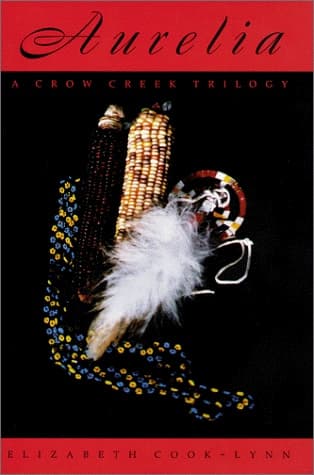
Aurelia: A Crow Creek Trilogy
Elizabeth Cook-LynnPublished1999
Pages462
Formathardcover
PublisherUniv Pr of Colorado
Synopsis
A collection of three novellas spanning several decades, Aurelia tells of the invasion of Indian lands, the destruction of a river--the Missouri, or Mni Sosa--in the twentieth century, the continued failure of the people of the Northern Plains (both Indian and white) to refute historical fraud, and the grief and joy of an American Indian family.
The first novella in this collection, From the River's Edge (first published as a single volume by Arcade Publishing, 1991), is the story of John Tatekeya's (tah-tAY-kee-ya) efforts to obtain reparation in a white man's court for forty-five head of stolen cattle. Even as Tatekeya's trial is proceeding, his people are suffering from the flooding of the Missouri River, an event precipitated by the construction of new
hydropower dams upriver from the Crow Creek Reservation.
In Circle of Dancers, Cook-Lynn follows Aurelia Blue, John Tatekeya's lover of nearly ten years. She is pregnant and must decide about both the baby and the father, Jason Big Pipe, even as she struggles with her own identity as a Dakota Sioux woman. As the story progresses, she and Jason fight for survival in the face of the further political and economic consequences of the destruction of the Mni Sosa, one of the greatest environmental disasters to strike the Northern Plains.
In the final volume, In the Presence of River Gods, Aurelia, now the mother of two, leaves Jason and moves with her dying grandmother to Eagle Butte on the Cheyenne River Sioux Reservation, two hundred miles away from Crow Creek. Aurelia has been witness to events from 1930 to 1990--including the birth of the American
Indian Movement and the uprising at Wounded Knee in 1974--and, like the Corn Wife from Sioux mythology, she carries the history of the people with her into an uncertain future.
Elizabeth Cook-Lynn is a critic, professor emerita, and member of the Crow Creek Sioux tribe of Fort Thompson, SD. Her other books include "Then Badger Said This", "Seek The House of Relatives", "The Power of Horses And Other Stories", "Why I Can't Read Wallace Stegner And Other Essays: A Tribal Voice", And "The Politics of Hallowed Ground", "A Hundred Years of Struggle for Sovereignty" (with Mario Gonzalez). Her new collection of poetry, " I Remember The Fallen Trees", is available from Eastern Washington University.
Recommendations
Off-Centre Stages: Fringe Theatre at the Open Space and the Round House, 1968-1983
by Jinnie Schiele
Erdrich shares Cook-Lynn's deep rootedness in Northern Plains tribal life and her unflinching examination of how historical injustices ripple through contemporary Native families. Like Aurelia, this novel weaves together multiple perspectives across time to show how a single act of violence—and the legal system's failure to address it—shapes an entire community's trajectory.
View book
Leslie Marmon Silko's Ceremony
by Allan Chavkin
Silko's novel shares Cook-Lynn's conviction that storytelling and ceremony are acts of resistance and survival. Both works use fragmented narratives and mythological frameworks to show how Indigenous peoples reclaim agency in the face of colonialism and environmental destruction—though Silko's approach is more lyrical and dreamlike where Cook-Lynn is more grounded in specific historical events.
View book
Bury My Heart at Wounded Knee An Indian History of the American West
by Dee Brown
This is your surprise recommendation—a work of narrative history rather than fiction, but essential context for understanding the real events that haunt Cook-Lynn's storytelling. Brown documents the exact historical period Aurelia witnesses (including Wounded Knee itself), and reading this alongside the trilogy will deepen your appreciation for how Cook-Lynn transforms documented tragedy into intimate human experience.
View book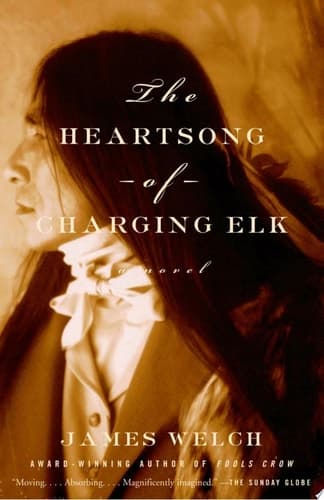
The Heartsong of Charging Elk: A Novel
by James Welch
Welch writes with the same quiet authority about displacement and cultural survival, following a Blackfeet man stranded in Europe who must navigate between worlds. Like Cook-Lynn's characters, Welch's protagonist carries the weight of his people's history while struggling with personal identity—but Welch adds an international dimension that gives the theme of cultural erasure an unexpected scope.
View book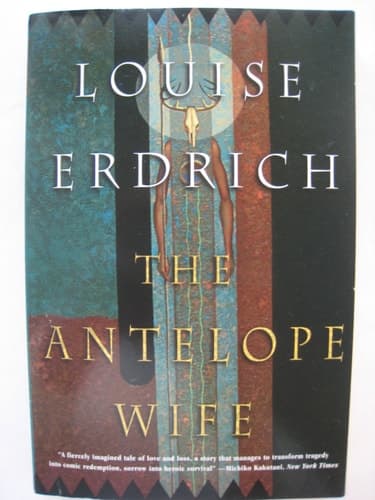
The Antelope Wife: A Novel
by Louise Erdrich
Kingsolver's novel shares Cook-Lynn's multigenerational structure and her attention to how environmental and political upheaval shapes intimate relationships, but she brings a more lyrical, almost magical-realist sensibility. Both authors ask how families endure and adapt, but Kingsolver emphasizes resilience and unexpected grace where Cook-Lynn emphasizes the weight of historical memory.
View bookAbout Elizabeth Cook-Lynn
Biography coming soon.
View author page