Synopsis
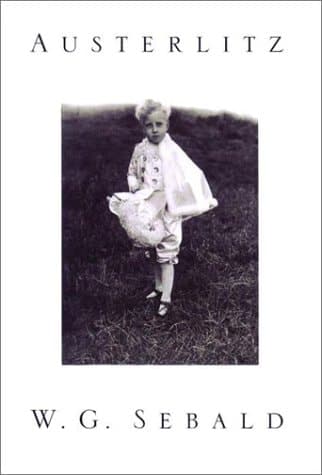
From one of the undisputed masters of world literature, a haunting novel of sublime ambition and power about a man whose fragmentary memories of a lost childhood lead him on a quest across Europe in search of his heritage. Jacques Austerlitz is a survivor – rescued as a child from the Nazi threat. In the summer of 1939 he arrives in Wales to live with a Methodist minister and his wife. As he grows up, they tell him nothing of his origins, and he reaches adulthood with no understanding of where he came from. Late in life, a sudden memory brings him the first glimpse of his origins, launching him on a journey into a family history that has been buried. The story of Jacques Austerlitz unfolds over the course of a 30-year conversation that takes place in train stations and travellers’ stops across England and Europe. In Jacques Austerlitz, Sebald embodies the universal human search for identity, the struggle to impose coherence on memory, a struggle complicated by the mind’s defences against trauma. Along the way, this novel of many riches dwells magically on a variety of subjects – railway architecture, military fortifications, insects, plants and animals, the constellations, works of art, a small circus and the three cities that loom over the book, London, Paris and Prague – in the service of its astounding vision.
Recommendations
The Rings of Saturn
by Winfried Georg Sebald
I know you've just finished Austerlitz, but hear me out—this is Sebald's other masterwork, and it operates in a completely different register. Where Austerlitz traces one man's fragmented past, Rings of Saturn is a meditation on historical decay and forgotten civilizations across East Anglia, with the same haunting digressive style but a more elegiac, almost apocalyptic tone. If you're hungry for more Sebald, this is the natural next step.
View book
The Freedom of the Migrant Objections to Nationalism
by Vilem Flusser
Flusser's slim, strange novel about a man reconstructing his family's diaspora through letters and fragments has that same quality of archaeological excavation that defines Austerlitz—the sense that identity is something you piece together from scattered evidence rather than something you simply possess. It's less narrative novel than philosophical puzzle-box, which makes it feel like a conversation partner to Sebald's work rather than an imitation.
View book
Invisible Cities
by Italo Calvino
This is my surprise pick for you, and here's why: Calvino's book shares Austerlitz's obsession with cities as repositories of meaning and memory, but he approaches it through pure imagination rather than historical trauma. Marco Polo describes impossible cities to Kublai Khan, and each description is a small meditation on how we construct identity through place. It's lighter in tone than Sebald, but equally intricate in its architecture—you'll find yourself mapping connections the way Austerlitz maps his past.
View book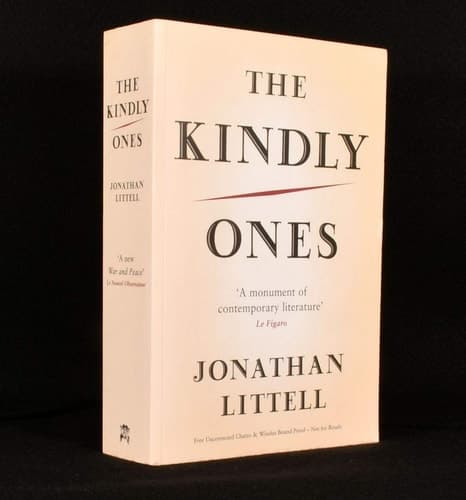
The Kindly Ones
by Jonathan Littell
Littell's sprawling, controversial novel is narrated by a Nazi officer reflecting on his past, and it shares Austerlitz's unflinching engagement with how the mind processes historical trauma and complicity. Like Sebald, Littell refuses easy moral clarity—he's interested in the texture of memory itself, how it distorts and rationalizes. It's demanding and uncomfortable in ways that will feel familiar to you, though the voice here is deliberately monstrous rather than sympathetic.
View bookAbout Winfried Georg Sebald
Biography coming soon.
View author page