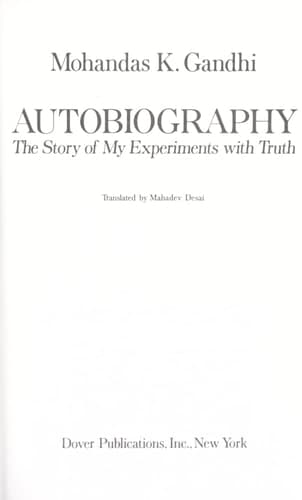
An Autobiography, Or, The Story of My Experiments with Truth
Mahatma GandhiPublished1983
Pages468
Formatpaperback
PublisherCourier Corporation
Synopsis
Gandhi's non-violent struggles against racism, violence, and colonialism in South Africa and India had brought him to such a level of notoriety, adulation that when asked to write an autobiography midway through his career, he took it as an opportunity to explain himself. He feared the enthusiasm for his ideas tended to exceed a deeper understanding of his quest for truth rooted in devotion to God. His attempts to get closer to this divine power led him to seek purity through simple living, dietary practices, celibacy, and a life without violence. This is not a straightforward narrative biography, in The Story of My Experiments with Truth, Gandhi offers his life story as a reference for those who would follow in his footsteps.
Recommendations
Alex Haley's The Autobiography of Malcolm X
by Anita J. Aboulafia
Like Gandhi, Malcolm X uses his life story as a philosophical manifesto, tracing his evolution from anger to a more complex understanding of truth and justice. Both men grapple publicly with their spiritual transformations, though they arrive at radically different conclusions—which makes reading them together genuinely illuminating rather than repetitive.
View book
The remains of the day de Kazuo Ishiguro
by Gallix/François
This is my surprise pick for you. Where Gandhi explicitly interrogates his choices and motivations, Ishiguro's butler Stevens performs a quiet, devastating self-examination through what he *doesn't* say. Both narrators are wrestling with whether they've lived rightly, but Ishiguro explores the tragedy of unexamined devotion—the inverse of Gandhi's relentless self-scrutiny.
View book
Stride Toward Freedom: The Montgomery Story
by Unknown
King explicitly positions himself as Gandhi's intellectual heir, and this account of the Montgomery bus boycott shows you how nonviolent resistance actually *functions* in a specific historical moment. Where Gandhi's autobiography is philosophical and retrospective, King's is more immediate and tactical—you'll see the principles you just read about being tested in real time.
View book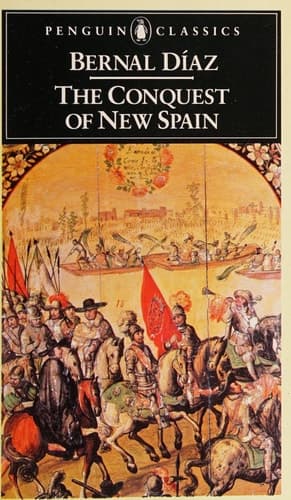
The Conquest of New Spain
by Bernal Diaz Del Castillo
A radically different perspective: this 16th-century soldier's account of the Spanish conquest offers an eyewitness narrative from the *colonizer's* side, written late in life to correct the historical record. Reading it after Gandhi creates a productive tension—you'll see how colonialism looked from inside the machinery, which deepens your understanding of what Gandhi was actually fighting against.
View book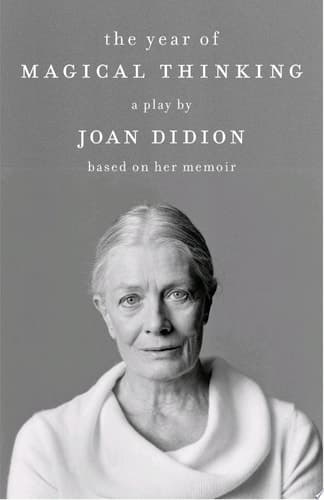
The Year of Magical Thinking A Play by Joan Didion Based on Her Memoir
by Joan Didion
Didion's meditation on grief after her husband's death shares Gandhi's unflinching commitment to examining her own interior life, but through the lens of loss rather than spiritual seeking. Both writers refuse sentimentality and demand precision from themselves—Didion's crystalline prose about confusion mirrors Gandhi's clarity about doubt.
View bookAbout Mahatma Gandhi
M
Mahatma Gandhi
1869–1948
Mohandas Karamchand Gandhi, known as Mahatma Gandhi, was a pre-eminent political and spiritual leader of India and the Indian independence movement. * [Works by Mohandas Karamchand Gandhi](http://www.wikilivres.info/wiki/Mohandas_K._Gandhi) French, English * [Works by Mohandas Karamchand Gandhi](http://en.wikisource.org/wiki/Author:Mohandas_K._Gandhi) English * [Œuvres de Mohandas Karamchand Gandhi](http://fr.wikisource.org/wiki/Mohandas_K._Gandhi) French
View author page