Synopsis
WINNER OF THE NOBEL PRIZE IN LITERATURE
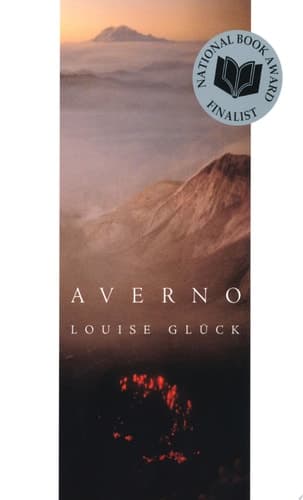
Averno is a small crater lake in southern Italy, regarded by the ancient Romans as the entrance to the underworld. That place gives its name to Louise Glück's tenth collection: in a landscape turned irretrievably to winter, it is a gate or passageway that invites traffic between worlds while at the same time resisting their reconciliation. Averno is an extended lamentation, its long, restless poems no less spellbinding for being without conventional resoltution or consolation, no less ravishing for being savage, grief-stricken. What Averno provides is not a map to a point of arrival or departure, but a diagram of where we are, the harrowing, enduring present.
Averno is a 2006 National Book Award Finalist for Poetry.
Recommendations
Generating recommendations…
Our AI is preparing recommendations for Averno Poems. This usually takes under a minute.
About Louise Glück
L
Louise Glück
1943–2023
Louise Elisabeth Glück (/ɡlɪk/ GLIK; born April 22, 1943) is an American poet and essayist. She won the 2020 Nobel Prize in Literature, whose judges praised "her unmistakable poetic voice that with austere beauty makes individual existence universal". Her other awards include the Pulitzer Prize, National Humanities Medal, National Book Award, National Book Critics Circle Award, and Bollingen Prize. From 2003 to 2004, she was Poet Laureate of the United States. [source](https://en.wikipedia.org/wiki/Louise_Gl%C3%BCck)
View author page