Synopsis
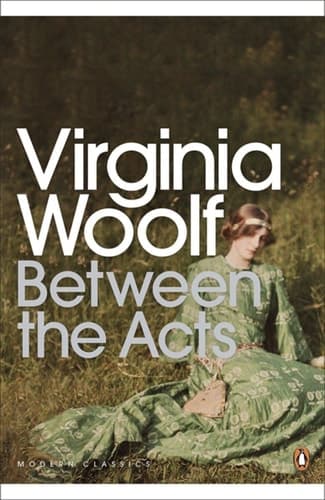
Virginia Woolf's last novel, in equal parts a triumphant celebration and witty mockery of 'Englishness', Between the Acts is edited by Stella McNichol, with an introduction and notes by Gillian Beer in Penguin Modern Classics. Outwardly a novel about life in a country house in whose grounds there is to be a pageant, Between the Acts is also a striking evocation of English experience in the months leading up to the Second World War. Through dialogue, humour and the passionate musings of the characters, Virginia Woolf explores how a community is formed (and scattered) over time. The tableau, a series of scenes from English history, and the private dramas that go on between the acts are closely interlinked. Through the figure of Miss La Trobe, author of the pageant, Virginia Woolf questions imperialist assumptions and, at the same time, re-creates the elusive role of the artist.
Virginia Woolf (1882-1941) is regarded as a major 20th century author and essayist, a key figure in literary history as a feminist and modernist, and the centre of 'The Bloomsbury Group'. This informal collective of artists and writers which included Lytton Strachey and Roger Fry, exerted a powerful influence over early twentieth-century British culture. Between 1925 and 1931 Virginia Woolf produced what are now regarded as her finest masterpieces, from Mrs Dalloway (1925) to the poetic and highly experimental novel The Waves (1931). She also maintained an astonishing output of literary criticism, short fiction, journalism and biography, including the playfully subversive Orlando (1928) and A Room of One's Own (1929) a passionate feminist essay.
If you enjoyed Between the Acts, you might like Woolf's The Waves, also available in Penguin Modern Classics.
'A powerful and prophetic statement'
Richard Shone, The Times
Recommendations
Generating recommendations…
Our AI is preparing recommendations for Between the Acts. This usually takes under a minute.
About Virginia Woolf
V
Virginia Woolf
1882–1941
Virginia Woolf was an English novelist, essayist, diarist, epistler, publisher, feminist, and writer of short stories, regarded as one of the foremost modernist literary figures of the twentieth century. ([Source][1].) [Comment from Ursula Le Guin on The Guardian][2]: > You can't write science fiction well if you haven't read it, though not all who try to write it know this. But nor can you write it well if you haven't read anything else. Genre is a rich dialect, in which you can say certain things in a particularly satisfying way, but if it gives up connection with the general literary language it becomes a jargon, meaningful only to an ingroup. Useful models may be found quite outside the genre. I learned a lot from reading the ever-subversive Virginia Woolf. > I was 17 when I read [Orlando][3]. It was half-revelation, half-confusion to me at that age, but one thing was clear: that she imagined a society vastly different from our own, an exotic world, and brought it dramatically alive. I'm thinking of the Elizabethan scenes, the winter when the Thames froze over. Reading, I was there, saw the bonfires blazing in the ice, felt the marvellous strangeness of that moment 500 years ago – the authentic thrill of being taken absolutely elsewhere. > How did she do it? By precise, specific descriptive details, not heaped up and not explained: a vivid, telling imagery, highly selected, encouraging the reader's imagination to fill out the picture and see it luminous, complete. > In [Flush][4], Woolf gets inside a dog's mind, that is, a non-human brain, an alien mentality – very science-fictional if you look at it that way. Again what I learned was the power of accurate, vivid, highly selected detail. I imagine Woolf looking down at the dog asleep beside the ratty armchair she wrote in and thinking what are your dreams? and listening . . . sniffing the wind . . . after the rabbit, out on the hills, in the dog's timeless world. > Useful stuff, for those who like to see through eyes other than our own. [1]:http://en.wikipedia.org/wiki/Virginia_Woolf [2]: http://www.guardian.co.uk/books/2011/may/14/science-fiction-authors-choice [3]: http://openlibrary.org/works/OL39360W/Orlando [4]: http://openlibrary.org/works/OL39320W/Flush
View author page