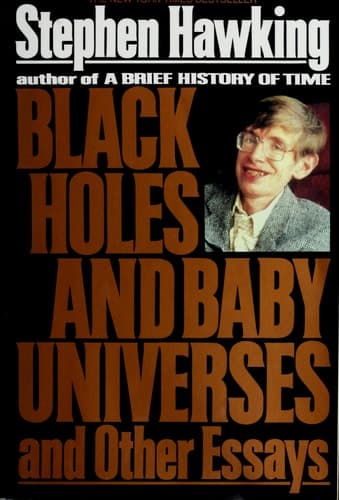
Synopsis
NEW YORK TIMES BESTSELLER • Thirteen extraordinary essays shed new light on the mystery of the universe—and on one of the most brilliant thinkers of our time.
“[Hawking] sprinkles his explanations with a wry sense of humor and a keen awareness that the sciences today delve not only into the far reaches of the cosmos, but into the inner philosophical world as well.”—The New York Times Book Review
In his phenomenal bestseller A Brief History of Time, Stephen Hawking literally transformed the way we think about physics, the universe, reality itself. In these thirteen essays and one remarkable extended interview, the man widely regarded as the most brilliant theoretical physicist since Einstein returns to reveal an amazing array of possibilities for understanding our universe.
Building on his earlier work, Hawking discusses imaginary time, how black holes can give birth to baby universes, and scientists’ efforts to find a complete unified theory that would predict everything in the universe. With his characteristic mastery of language, his sense of humor and commitment to plain speaking, Stephen Hawking invites us to know him better—and to share his passion for the voyage of intellect and imagination that has opened new ways to understanding the very nature of the cosmos.
Recommendations
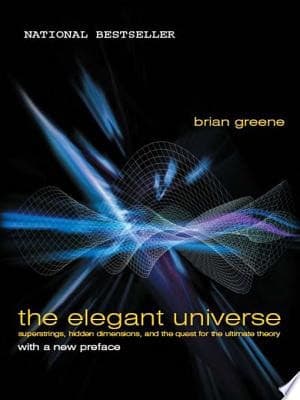
The Elegant Universe: Superstrings, Hidden Dimensions, and the Quest for the Ultimate Theory
by Brian Greene
Greene has that same gift Hawking possessed—taking genuinely difficult physics and making it luminous without dumbing it down. Where Hawking explores black holes and baby universes, Greene takes you on a tour of string theory and extra dimensions, and he shares Hawking's ability to pepper serious cosmology with moments of genuine wit and wonder about what it all means.
View book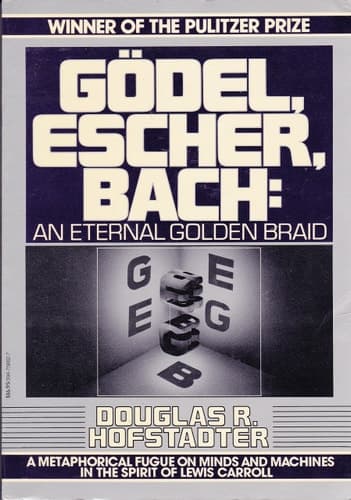
Gödel, Escher, Bach: An Eternal Golden Braid
by Douglas Hofstadter
This is the surprise pick, but hear me out: Hofstadter shares Hawking's fascination with how systems—whether mathematical, artistic, or musical—reveal hidden patterns and self-reference in unexpected ways. It's playful and deeply intellectual at once, with dialogues between characters that have the same wry humor you enjoyed in Hawking's essays, but applied to consciousness and meaning rather than cosmology.
View book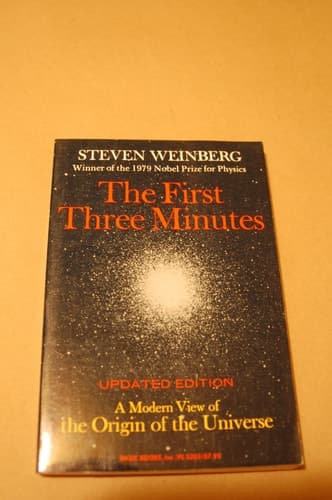
The First Three Minutes: A Modern View of the Origin of the Universe
by Steven Weinberg
Weinberg won the Nobel Prize for the same kind of unified theory work Hawking discusses in these essays, and his writing has a crystalline clarity—he explains the Big Bang and particle physics with the precision of someone who actually helped build the theoretical framework. It's shorter and more focused than Hawking's essays, but it goes deeper into the physics of those first moments of creation.
View book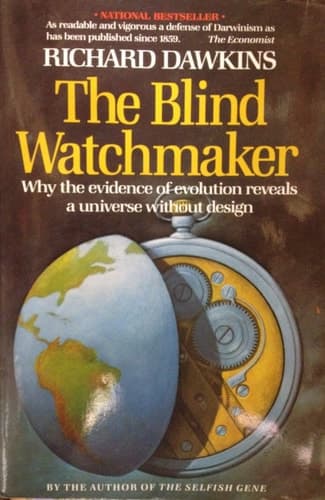
The Blind Watchmaker Why the Evidence of Evolution Reveals a Universe Without Design
by Richard Dawkins
Published in 1986, this predates Hawking's essay collection and brings that same rigorous, almost playful debunking energy to biology that Hawking brings to physics. Dawkins argues against design in nature the way Hawking argues for a universe governed by discoverable laws—both are fundamentally about replacing mystery with mechanism, and both write with infectious enthusiasm about what that means.
View book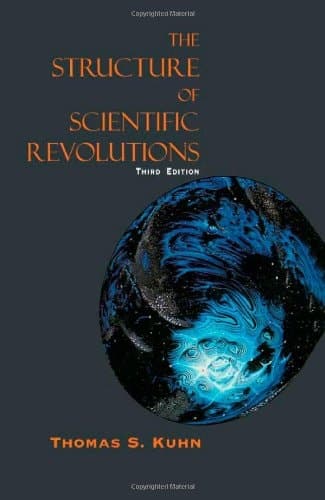
The Structure of Scientific Revolutions
by Thomas S. Kuhn
This is the philosophical companion to Hawking's work—while he's explaining *what* we know about the universe, Kuhn explains *how* we come to know it and why our understanding shifts so dramatically (like when Einstein replaced Newton). It's denser than Hawking's essays, but it'll deepen your appreciation for why Hawking's unified theory quest matters beyond just the equations.
View bookAbout Stephen Hawking
Biography coming soon.
View author page