Synopsis
This title was first published in 2001: Featuring original research concerning young African-Caribbeans in Birmingham, this book addresses complex issues of urban violence and insecurity, racism and discrimination, alienation, resistance and social networks. Employing the methodology of sociological intervention developed by Alain Touraine, the book explores the experiences of a group of young people who are simultaneously presumed to be victims and perpetrators of violence. It examines their relationship to this violence, its meanings for and effects upon them, how they constitute themselves as social actors and subjects, and their capacity for action. The book also addresses the fact that ethnic monitoring and multicultural policies place the question of ethnicity on the British social and political agenda alongside issues of racism and discrimination. Exploring both the perceived and personally experienced position of young people within this context, it sheds important new light upon processes of group identification and action.
Recommendations
Ain't No Makin' It: Aspirations And Attainment In A Low-income Neighborhood, Expanded Edition
by Jay MacLeod
MacLeod spent years embedded with working-class youth in Boston much as Owen did in Birmingham, using ethnographic methodology to understand how structural inequality shapes identity and life trajectories. Where Owen examines violence and social networks among African-Caribbean youth, MacLeod traces how economic systems create what he calls 'frames of reference' that determine who sees opportunity—it's the same sociological eye turned toward American poverty, and you'll recognize that patient, non-judgmental approach to understanding young people's agency within constrained circumstances.
View book
Religion and the Rise of Jim Crow in New Orleans
by James B. Bennett
Alexander examines how criminal justice systems have become a mechanism of racial control in ways that directly contextualize the urban violence and policing dynamics Owen explores—she's asking the harder question about what happens when young people are simultaneously victims and perpetrators within a system designed to criminalize them. Published in 2010, this gives you a decade-later perspective on how the multicultural policies and ethnic monitoring Owen discusses in 2001 actually functioned in practice.
View book
Clockers
by Richard Price
This is your surprise recommendation—it's a crime novel, yes, but Price constructs it as a sociological investigation of drug dealers in Jersey City with the same rigor Owen brings to his academic study. The novel doesn't judge its characters; it lets you inhabit their logic, their networks, their constrained choices, and their very real humanity. Where Owen uses Touraine's methodology to understand social action, Price uses narrative to achieve something similar—you'll find the same refusal to reduce young people to stereotypes of victimhood or criminality.
View book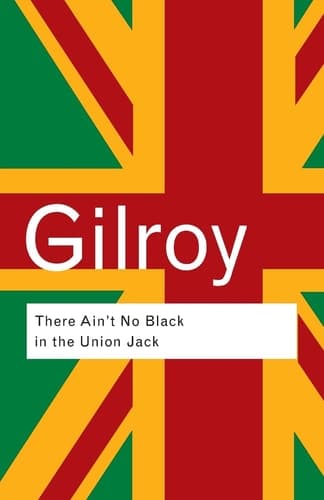
There Ain't No Black in the Union Jack (Routledge Classics)
by Paul Gilroy
Gilroy's 1987 work is the theoretical foundation many scholars like Owen build upon—he's examining how Britishness itself is constructed through racial exclusion and how Black British identity emerges as a counter-formation. Reading this before or alongside Owen gives you the conceptual architecture for understanding why 'Britannity' in Owen's title is so fraught, and how the young people he studies are navigating an identity category that's simultaneously offered and denied to them.
View bookAbout David Owen
D
David Owen
Died 1622
Biography coming soon.
View author page