
Blood Brothers: A Short History of the Civil War (Volume 26) (Williams-Ford Texas A&M University Military History Series)
Frank E. VandiverPublished1992
Pages224
Formathardcover
PublisherTexas A&M University Press
Synopsis
Brothers by blood before the war; brothers inblood after. The blood mingled in the Civil Was became the symbol and perverse source of indissoluble union between two sections, two ways of life, two visions of the future, and even two revolutions.
In riveting detail, veteran Civil War historian Frank E. Vandiver recounts the campaigns and major battles of the first war of the Industrial Revolution, with its machinery, firepower, and engineering beyond imagination. With provocative insight, he traces a picture of the war as rooted in the character and vision of its two leaders and their two sectional revolutions.
In the North, Abraham Lincoln built a massive war effort by expanding executive authority, sometimes in ways beyond the Constitution. Not only emancipation, but also new monetary policies, new forms of commercial organization and production, and new ways of raising and commanding armies made a different United States, shaped for world power.
In the service of the Confederacy, Jefferson Davis, a states’ righter, became a Confederate nationalist. Keeping up the fight forced him and many Southerners to accept both a centralization and an industrialization they hated. When the dream was lost and the country gone, vestiges of this revolution would make the Southern system compatible with the new economic, social, and political system that had emerged in the North. The South might look back fondly, but it was readier than it knew for what would come: a new union, one and finally indivisible.
Recommendations

The Coming of the Civil War 1837 - 1861
by John Niven
Dodd was writing this in the 1930s, giving you a historian from a different era wrestling with the same question Vandiver does: how did two visions of America become irreconcilable? Where Vandiver focuses on Lincoln and Davis as architects of competing revolutions, Dodd traces the intellectual and political currents that made those two men inevitable—you'll see the war's origins in a completely different light.
View book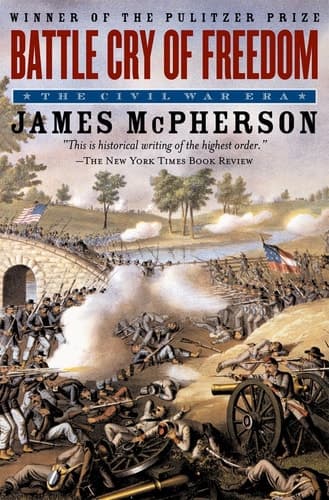
Battle Cry of Freedom The Civil War Era
by James M. McPherson
McPherson shares Vandiver's gift for making military machinery and strategy vivid, but he goes deeper into the soldiers' letters and diaries—the human texture beneath the grand strategic vision. If you appreciated how Vandiver showed the war reshaping both societies' economic and political systems, McPherson shows you how ordinary people experienced that transformation in real time.
View book
The Killer Angels
by Michael Shaara
This is the surprise pick—it's historical fiction rather than history, but Shaara does something Vandiver hints at: he gets inside the minds of Lee and Longstreet during Gettysburg and lets you feel the weight of their competing philosophies in real time. You'll recognize the ideological tensions Vandiver describes, but experienced through the fog and mud of actual command decisions.
View book
The Rise of American Democracy: Jefferson to Lincoln
by Sean Wilentz
Wilentz gives you the long view that Vandiver's focused study doesn't—he traces how the political and economic systems that collided in 1861 actually developed over seventy years. You'll understand why the North's and South's 'revolutions' felt so incompatible by showing how they grew from different roots in the founding itself.
View book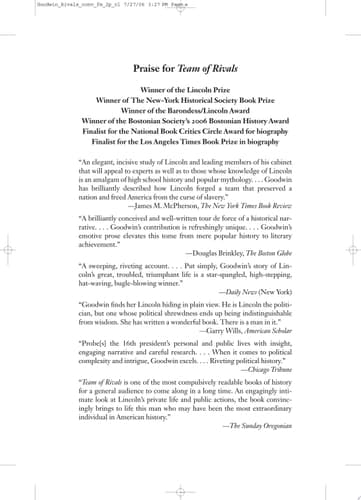
Team of Rivals The Political Genius of Abraham Lincoln
by Doris Kearns Goodwin
Where Vandiver shows you Lincoln as a war leader expanding executive power, Goodwin shows you Lincoln the politician managing his cabinet full of rivals and enemies—it's a different angle on how the North's 'revolution' actually happened. Her narrative style is more intimate than Vandiver's analytical approach, but she's equally rigorous about how wartime decisions reshaped the nation.
View bookAbout Frank E. Vandiver
F
Frank E. Vandiver
1925–2005
Biography coming soon.
View author page