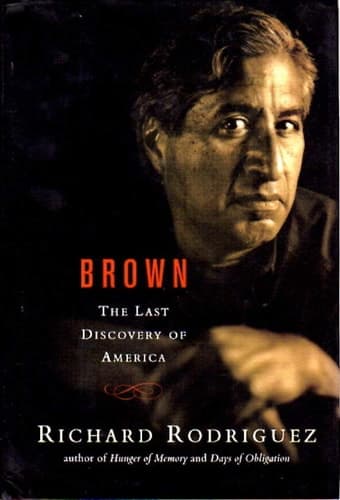
Brown: The Last Discovery of America
Richard RodriguezPublished2002
Pages232
Formathardcover
PublisherViking Adult
Synopsis
The author of Hunger of Memory and Days of Obligation concludes his "trilogy of American public life" by contemplating the many cultural associations of the color brown--toil, decay, impurity, and time--as he considers the meaning of Hispanics in American society. 30,000 first printing.
Recommendations

Sandra Cisneros' The House on Mango Street
by Elizabeth L. Chesla
Like Rodriguez, Cisneros writes in lyrical, essayistic fragments that accumulate into something larger than their parts—here, the geography of identity and belonging through the lens of a Latina girl in Chicago. Both authors use concrete, sensory details (Rodriguez's color symbolism, Cisneros's physical spaces) to excavate what it means to inhabit American culture from the margins.
View book
The Souls of Black Folk and Clotel By W.E.B. Du Bois
by DuBois Blight Gooding Bro
Published in 1903, this collection predates Rodriguez by a century but asks nearly identical questions about color, citizenship, and visibility in America—Du Bois's concept of 'double consciousness' is the spiritual ancestor to Rodriguez's meditation on how brown bodies are perceived and misread. You'll recognize Rodriguez's intellectual DNA here, and the historical perspective will deepen your understanding of what he's arguing.
View book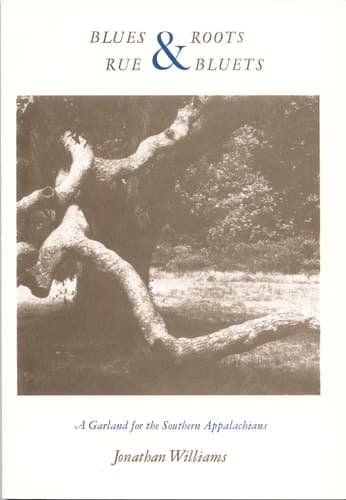
Blues and Roots/Rue and Bluets A Garland for the Southern Appalachians
by Jonathan Williams
This is the surprise pick—it's a fragmented meditation on color (specifically blue) and longing that reads like poetry, philosophy, and personal essay all at once. Nelson does for blue what Rodriguez does for brown: she refuses to let a color be simple, instead using it as a prism to examine desire, loss, and meaning. It's shorter and more formally experimental than Rodriguez, but the intellectual restlessness is identical.
View book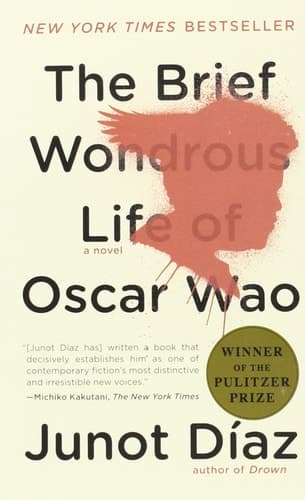
The Brief Wondrous Life of Oscar Wao
by Junot Díaz
Díaz writes about Dominican-American identity with the same unflinching honesty as Rodriguez, but through the vehicle of a sprawling, digressive novel that feels like overhearing someone's entire life story. Where Rodriguez contemplates brown abstractly and historically, Díaz shows you brown bodies living, failing, desiring, and persisting—the lived reality beneath Rodriguez's meditation.
View book
Die Wiederkehr der Zeichen: Eine psychoanalytische Studie zu Knut Hamsuns «Hunger» (Texte und Untersuchungen zur Germanistik und Skandinavistik) (German Edition)
by Thomas Fechner-Smarsly
A wildly different book on the surface—a Norwegian modernist novel from 1890—but Hamsun's narrator is obsessed with the gap between inner consciousness and outer perception, between who he is and how the world sees him. It's a formal experiment in alienation that echoes Rodriguez's preoccupation with visibility and invisibility, though Hamsun approaches it through psychological fragmentation rather than cultural analysis.
View bookAbout Richard Rodriguez
Biography coming soon.
View author page