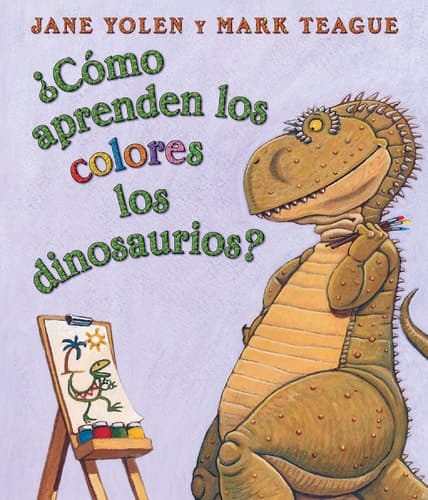
¿Cómo Aprenden los Colores los Dinosaurios?
Jane YolenPublished2006
Pages6
FormatBoard book
PublisherScholastic Incorporated
Synopsis
The bestselling, award-winning team of Yolen and Teague present their third original dinosaur board book, a fun read-aloud that teaches children all the colors of the rainbow.
"Un dinosaurio aprende estos colores primero: Bajo la cama, el rojo del camión de bomberos.Una toalla morada tirada en el suelo. Un cartel verde que dice te quiero". Con increíbles ilustraciones y un texto rimado, este nuevo libro de la serie de los dinosaurios cautivará e inspirará a los niños mientras aprenden los colores.
Recommendations
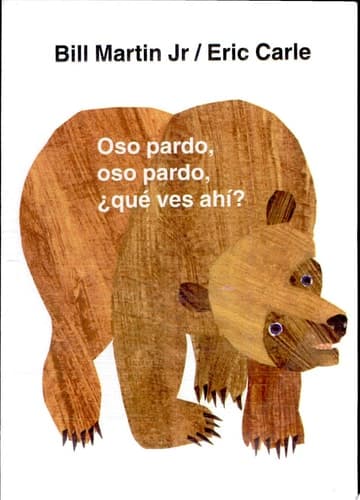
Brown bear, brown bear, what do you see?
by Bill Martin, Jr.
Martin's rhythmic, repetitive structure mirrors Yolen's rhyming approach perfectly, but he layers in a visual discovery element that makes color-learning feel like a game of prediction. Where Yolen anchors colors to everyday objects a child finds around their room, Martin creates a chain-reaction narrative that keeps young readers anticipating what comes next—the same satisfying pattern-recognition that makes the dinosaur book so engaging.
View book
The Day the Cowboys Quit
by Elmer Kelton
This one takes the color-learning concept and gives it personality and humor—each crayon has grievances, opinions, and a voice. If your child loved how Yolen made colors feel like characters in a story, Daywalt goes further by actually making them argue with each other. It's still accessible for the same age group, but it sneaks in emotional intelligence and problem-solving alongside the color recognition.
View book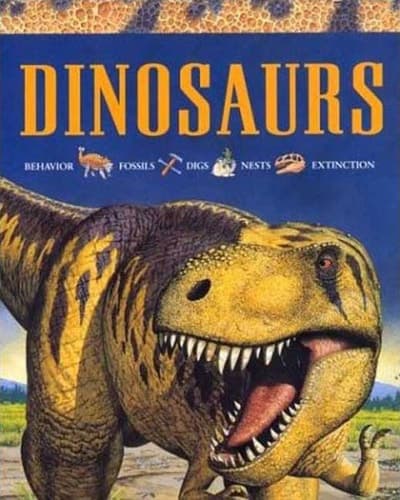
Dinosaurs
by Dr Michael Benton
Here's your surprise pick: it's absurdist humor wrapped in a dinosaur package with vibrant illustrations. Tee's dinosaurs are silly and unexpected—they're not learning anything in the traditional sense, but the book has that same infectious, read-aloud energy and visual richness. It's proof that dinosaur books for young children don't have to be educational to be utterly delightful, and the randomness of the premise (why underpants?) creates the kind of giggly recognition kids get from Yolen's everyday-object approach.
View book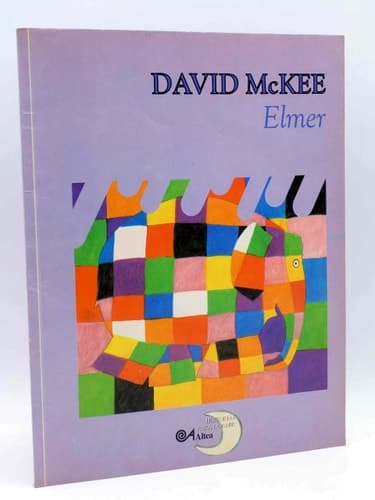
Elmer
by David McKee
McKee's patchwork elephant teaches color and pattern recognition through a character who's visibly, joyfully different from everyone else—and the book celebrates that difference rather than "fixing" it. Where Yolen shows colors as things to discover in your environment, McKee shows that colors and patterns can be part of who you are. The illustrations are bold and geometric in a way that makes color-learning feel almost architectural.
View book
Little Blue and Little Yellow
by Leo Lionni
Published in 1959, this is your cross-decade recommendation, and it's deceptively simple: two colored dots become friends and discover what happens when they overlap. Lionni uses color as a language for friendship and transformation in a way that feels almost poetic. Unlike Yolen's approach of naming colors in a child's world, Lionni makes colors themselves the characters—it's a different philosophy about how young children understand color, and it opens up a whole other way of thinking about the concept.
View bookAbout Jane Yolen
J
Jane Yolen
Born 1939
"Jane Hyatt Yolen (born February 11, 1939) is an American writer of fantasy, science fiction, and children's books. She is the author or editor of more than 280 books. Her short story Sister Emily's Lightship won the Nebula Award." - Wikipedia
View author page