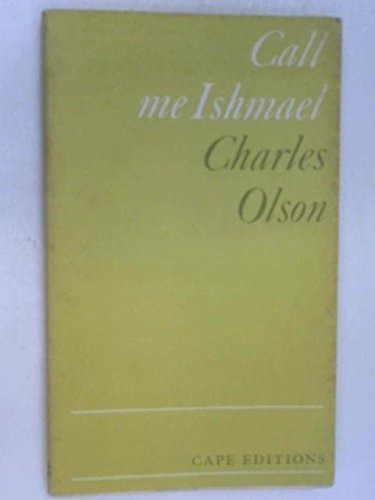
Synopsis
One of the most stimulating essays ever written on Moby Dick, and for that matter on any piece of literature, and the forces behind it."—San Francisco Chronicle
First published in 1947, this acknowledged classic of American literary criticism explores the influences—especially Shakespearean ones—on Melville's writing of Moby-Dick. One of the first Melvilleans to advance what has since become known as the "theory of the two Moby-Dicks," Olson argues that there were two versions of Moby-Dick, and that Melville's reading King Lear for the first time in between the first and second versions of the book had a profound impact on his conception of the saga: "the first book did not contain Ahab," writes Olson, and "it may not, except incidentally, have contained Moby-Dick." If literary critics and reviewers at the time responded with varying degrees of skepticism to the "theory of the two Moby-Dicks," it was the experimental style and organization of the book that generated the most controversy.
Recommendations
Generating recommendations…
Our AI is preparing recommendations for Call Me Ishmael. This usually takes under a minute.
About Charles Olson
C
Charles Olson
1910–1970
Charles Olson was a second generation American modernist poet who was a crucial link between earlier figures like Ezra Pound and William Carlos Williams and the New American poets, a rubric which includes the New York School, the Black Mountain School, the Beat poets, and the San Francisco Renaissance. Consequently, many postmodern groups, such as the poets of the Language School, include Olson as a primary and precedent figure. Across the Atlantic, these various poetic movements have exerted a deep and ongoing influence on an important array of alternative and experimental writers, including Roy Fisher, Geoffrey Hill, JH Prynne and Edwin Morgan, behind whose works lurks Olson's ghost of language-driven inventiveness. ([Source][1].) [1]:http://en.wikipedia.org/wiki/Charles_Olson
View author page