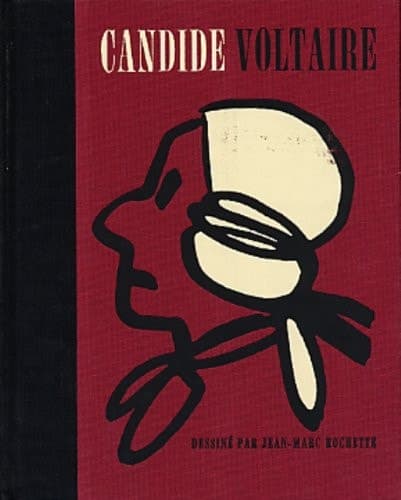
Synopsis
« On oublie que sous la couche de nos souvenirs d'explications de texte, Candide cache un livre admirable de drôlerie, d'aventure, d'ironie, d'invention et de lucidité, antidote éternel à tous les fanatismes passés, présents et à venir.
En faisant ressortir le caractère éminemment burlesque et provocateur de Candide, on amènera plus facilement les lecteurs à découvrir le texte sous un jour nouveau. Mon souhait serait que l'on aborde l'oeuvre sans l'appréhension d'un passage obligé, mais avec la curiosité de la découverte d'un conte philosophique, d'une plaisanterie, d'une merveilleuse coiennerie comme l'appelait Voltaire. »
Jean-Marc Rochette
Recommendations
Generating recommendations…
Our AI is preparing recommendations for Candide ou l'optimisme: d'après l'oeuvre de Voltaire. This usually takes under a minute.
About Voltaire
V
Voltaire
1694–1778
François-Marie Arouet, better known by the pen name Voltaire, was a French Enlightenment writer and philosopher famous for his wit and for his advocacy of civil liberties, including freedom of religion and free trade. Voltaire was a prolific writer and produced works in almost every literary form including plays, poetry, novels, essays, historical and scientific works, more than 20,000 letters and more than 2,000 books and pamphlets. He was an outspoken supporter of social reform, despite strict censorship laws and harsh penalties for those who broke them. As a satirical polemicist, he frequently made use of his works to criticize intolerance, religious dogma and the French institutions of his day. Voltaire was one of several Enlightenment figures (along with Montesquieu, John Locke and Jean-Jacques Rousseau) whose works and ideas influenced important thinkers of both the American and French Revolutions. ([Source][1]) [1]: http://en.wikipedia.org/wiki/Voltaire
View author page