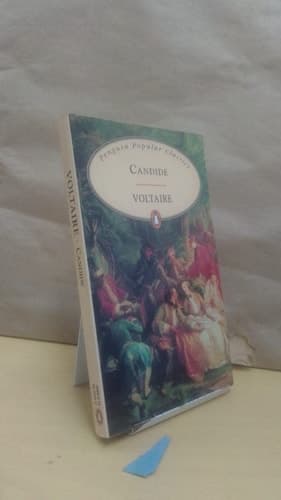
Synopsis
Candide, or Optimism (1759) written by Voltaire, the shining star of the French Enlightenment, is a biting, hilarious and frequently outrageous satire that pokes philosophical fun at -- of all things -- the doctrine of optimism. Candide is a nave youth stubbornly adhering to the notion that "all is for the best in this, the best of all possible worlds," despite being cast into a flood of misfortunes and picaresque misadventures that take him around the world. Whether Candide and optimism itself emerges unscathed in the end, hinges upon his own deceptively simple words: "let us cultivate our garden."
Recommendations
Rasselas- Prince of Abyssinia
by Samuel Johnson
Johnson's 1759 contemporary of Candide shares that same Enlightenment-era skepticism about easy answers, but approaches it through a prince's escape from an isolated paradise to discover the world's actual complexity. Where Voltaire uses slapstick misfortune to puncture optimism, Johnson uses philosophical dialogue—it's like watching someone methodically dismantle the same naive worldview, just with more measured British restraint.
View book
The Apocalyptic Vision of Mikhail Bulgakov's the Master and Margarita (Studies in Slavic Language & Literature)
by Edward E. Ericson
This 1960s Russian novel has that same anarchic energy and dark comedy as Candide—absurd situations pile up, authority figures are exposed as ridiculous, and the narrative refuses to settle into comfortable conclusions. But Bulgakov adds a supernatural layer that makes the satire even more disorienting; you're never quite sure what rules the world operates under, which somehow makes the critique of ideology even sharper.
View book
Invisible Cities
by Italo Calvino
A genuine left-turn recommendation: this isn't a novel in the traditional sense, but rather Marco Polo describing impossible cities to Kublai Khan. It shares Candide's obsession with cataloging the world and finding meaning in it, but Calvino's fragmented, poetic approach feels like what happens when you stop trying to impose a single narrative on experience and instead embrace contradiction—it's the philosophical endpoint Candide only hints at.
View book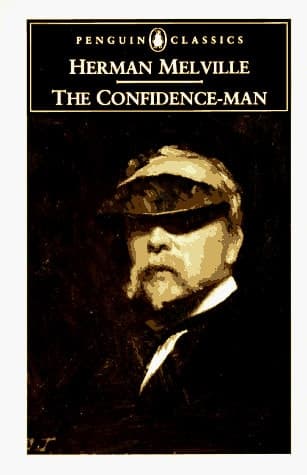
The Confidence-Man His Masquerade
by Herman Melville
Melville's 1857 riverboat novel is criminally underread—it's Candide's American cousin, where every character Melville meets is either a con artist or a mark, and the line between them dissolves. The comedy comes from watching people's optimistic assumptions about human nature get systematically exploited, all while the narrative itself becomes increasingly unreliable, mirroring the moral vertigo of the world it describes.
View book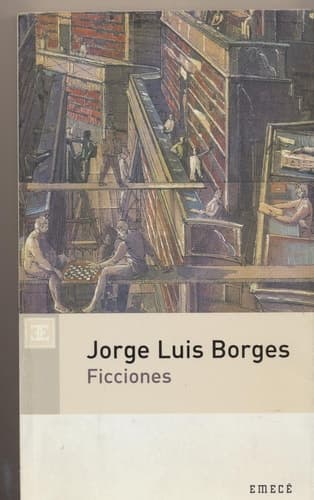
Ficciones
by Jorge Luis Borges
These interconnected short stories operate like Candide's adventures but compressed into intellectual puzzles—Borges takes a single absurd premise (a library containing every possible book, a map the size of the territory it represents) and follows it to its logical, hilarious conclusion. It's the same impulse to expose how our systems for understanding the world are fundamentally broken, just expressed through metafiction rather than slapstick.
View bookAbout Voltaire
V
Voltaire
1694–1778
François-Marie Arouet, better known by the pen name Voltaire, was a French Enlightenment writer and philosopher famous for his wit and for his advocacy of civil liberties, including freedom of religion and free trade. Voltaire was a prolific writer and produced works in almost every literary form including plays, poetry, novels, essays, historical and scientific works, more than 20,000 letters and more than 2,000 books and pamphlets. He was an outspoken supporter of social reform, despite strict censorship laws and harsh penalties for those who broke them. As a satirical polemicist, he frequently made use of his works to criticize intolerance, religious dogma and the French institutions of his day. Voltaire was one of several Enlightenment figures (along with Montesquieu, John Locke and Jean-Jacques Rousseau) whose works and ideas influenced important thinkers of both the American and French Revolutions. ([Source][1]) [1]: http://en.wikipedia.org/wiki/Voltaire
View author page