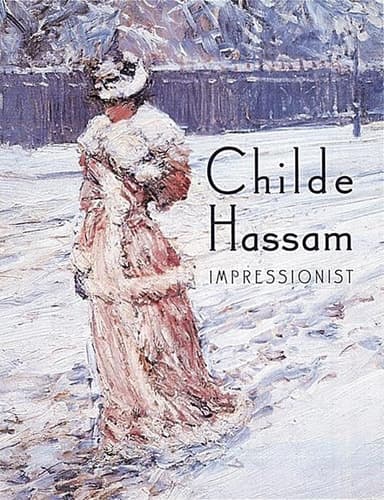
Childe Hassam: Impressionist
Warren AdelsonPublished1999
Pages256
Formathardcover
PublisherAbbeville Press
Synopsis
Childe Hassam's impressive career as one of America's foremost Impressionists is celebrated and illuminated in this dazzlingly beautiful volume.
No other American Impressionist ever surpassed the quality and variety of Hassam's output as a painter and draftsman. Equally talented in oils, watercolors, and prints, he explored rain-swept city scenes, glorious gardens, exquisite women, and stirring flag-lined streets. Many of these irresistible pictures are hidden in private collections and are rarely, if ever, accessible to the public; others are on view at major museums across the country, from the Metropolitan Museum to the Museum of Fine Arts, Boston, to the Los Angeles County Museum of Art.
By approaching Childe Hassam (1859-1935) from different angles, the three authors reveal this multitalented artist's many facets and uncover previously unknown aspects of his life and work. The authoritative essays are illustrated with a brilliant array of color illustrations that represent all of Hassam's styles, from Barbizon-inspired Tonalism to Impressionism to Post-Impressionism. The book concludes with an invaluable illustrated chronology and an annotated bibliography.
Recommendations
The Shock of the New Art and the Century of Change
by Robert Hughes
Hughes writes about modern art history with the same infectious enthusiasm Adelson brings to Hassam, but he's arguing *against* the Impressionists rather than celebrating them—he sees them as the beginning of art's descent into self-indulgence. If you loved the visual analysis in the Hassam book, you'll find Hughes's eye for detail and his willingness to make bold claims about what makes art matter genuinely bracing.
View book
The Letters of Vincent Van Gogh
by Vincent Van Gogh
Since you've just spent time with Hassam's paintings across multiple mediums and styles, reading Van Gogh's own words about his artistic struggles and evolution offers an intimate counterpoint—here's an artist wrestling with similar questions about color, light, and technique, but doing it in real time through correspondence. The immediacy of his voice reveals how artists actually think about their work in ways even the best monograph can't quite capture.
View book
The remains of the day de Kazuo Ishiguro
by Gallix/François
This might seem like a left turn, but hear me out: Ishiguro constructs his novel the way Hassam constructs a composition—through careful layering, where what's *not* said is as important as what appears on the canvas. Both works are about the tension between surface beauty and hidden depths, and both reward slow, attentive looking. The narrator's gradual self-revelation mirrors how you might discover new details in a Hassam painting with each viewing.
View book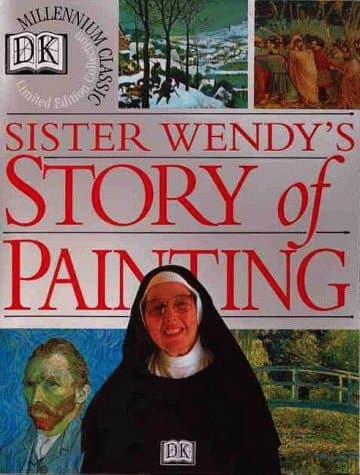
Sister Wendy's Story of Painting
by Wendy Beckett
Published in 1994, this predates your Hassam book and offers something wonderfully different: an art historian who writes like she's having a conversation with you in front of the actual painting. Her observations are quirky, personal, and deeply felt rather than academic—she'll make you see familiar works in completely new ways, which is exactly the kind of fresh perspective you might want after the comprehensive Adelson treatment.
View book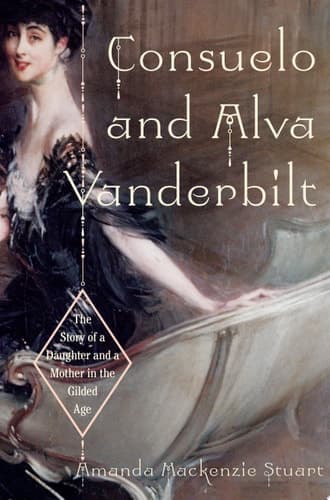
Consuelo and Alva Vanderbilt The Story of a Mother and Daughter in the Gilded Age
by Amanda MacKenzie Stuart
Hassam lived and worked during America's most transformative period, and understanding the wealth, urban development, and social upheaval of his era will deepen your appreciation for why his rain-swept streets and flag-lined avenues mattered so much. Balleisen writes social history with genuine narrative drive—this isn't dusty academic work, but rather the story of how America became modern, which is essentially the story of Hassam's subject matter.
View bookAbout Warren Adelson
Biography coming soon.
View author page