Synopsis
Militærhistorie, krigshistorie - om den tyske militærhistoriske klassiker: Vom Kriege og forfatteren, general Carl von Clausewitz (1780-1831), skrevet af den anerkendte engelske historiker, militærhistoriker og sikkerhedspolitiske ekspert, professor Michael Howard. "Clausewitz is generally acknowledged to be the greatest of writters on war. The question he raised are hotly debated even today: is it possible to have a theory of war at all? how does theory relate to practice? what did Clausewitz really mean in his much quoted and misquoted aphorism "War is the continuation of policy by other means? Its remarkable how much of what he has to say - at a time when the range of firearms was fifty yards - has remained relevant, not only under military conditions transformed out of all recognition, but for a readership far broader that the officers of the Prussian Army whose education he primarily had in mind. Michael Howard guides the reader througt Clausewitz's major work: On War, and explains the ideas in terms both of Clausewitz' own experiences as a professional soldier in the Napoleonic Wars and of the intellectual background of his time." Contents: Note on quotations; Introduction; Clausewitw in his time; Theory and practice in war; Ends and means in war; Limited and absolute war; The legacy of Clausewitz.
Recommendations
An Anatomy of Power The Social Theory of Michael Mann
by John A. Hall
Galbraith does for economics and statecraft what Howard does for military theory—he takes a foundational concept (power itself) and dissects how it actually operates across institutions, rather than how textbooks say it should. You'll recognize that same intellectual rigor and the way both authors ground abstract theory in historical reality, from the Napoleonic era to Cold War economics.
View book
The Guns of August
by Barbara Wertheim Tuchman
Tuchman reconstructs the opening month of WWI with the kind of narrative momentum that makes you feel the collision between Clausewitzian theory and the chaos of actual warfare. Where Howard explains Clausewitz's ideas, Tuchman shows you the moment those ideas met reality—generals trying to apply 19th-century doctrine to 20th-century weapons, with catastrophic results.
View book
The Apocalyptic Vision of Mikhail Bulgakov's the Master and Margarita (Studies in Slavic Language & Literature)
by Edward E. Ericson
This is the surprise one, but hear me out: Bulgakov was writing under Stalin while thinking deeply about power, ideology, and how systems justify themselves—he's wrestling with the same questions Clausewitz posed about the relationship between force and policy, just through a darkly comic, allegorical lens instead of a military one. The novel's structure mirrors strategic thinking: multiple timelines, hidden meanings, the gap between official narrative and truth.
View book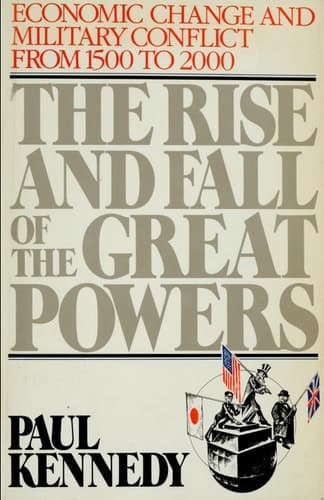
The Rise and Fall of the Great Powers: Economic Change and Military Conflict from 1500 to 2000
by Paul Kennedy
Kennedy extends Clausewitz's framework across five centuries, showing how military capacity, economic resources, and political will interact—he's essentially asking 'what would Clausewitz say about empires?' His analysis of how states overextend themselves militarily while their economies weaken has that same penetrating clarity Howard brings to On War, but applied to the long arc of history.
View book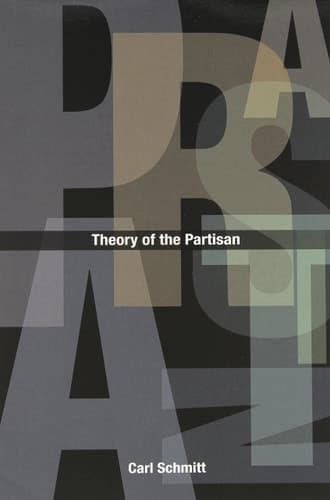
Theory of the Partisan Intermediate Commentary on the Concept of the Political
by Carl Schmitt
Schmitt was directly engaging with Clausewitz's legacy in the 1930s, asking harder questions about what 'politics by other means' actually means when you strip away the euphemisms. It's a shorter, denser read than Howard's book, but it'll deepen your understanding of why Clausewitz remains so contested—Schmitt shows you the philosophical stakes beneath the military theory.
View bookAbout Michael Howard
Biography coming soon.
View author page