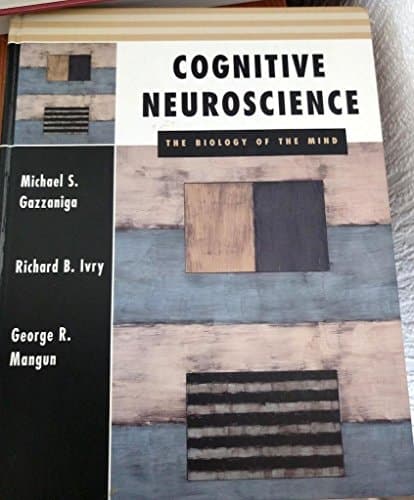
Cognitive Neuroscience The Biology of the Mind
Michael S. GazzanigaPublished1998
Pages550
Formathardcover
PublisherW.W. Norton
Synopsis
Written by leading researchers in the field, COGNITIVE NEUROSCIENCE: THE BIOLOGY OF THE MIND shows how the complex processes of the mind are enabled by the underlying biology of the brain. Relying on patient studies and case histories, the authors explore the underlying neurological chemistry behind critical human diseases, such as Alzheimer's and Parkinson's, and suggest various treatments.
Recommendations

The Man who Mistook His Wife for a Hat and Other Clinical Tales
by Oliver Sacks
Sacks does what Gazzaniga does—uses neurological case studies to illuminate how the brain constructs reality—but he writes with a narrative warmth that makes each patient's peculiar condition feel like a small mystery to solve. Where Gazzaniga gives you the neuroscience, Sacks gives you the human story first, then reveals the fascinating brain mechanics underneath.
View book
Consciousness Explained
by Daniel Clement Dennett
Dennett tackles the same fundamental question Gazzaniga circles around—how does physical brain activity become subjective experience?—but he's genuinely combative about it, arguing against intuitions you probably hold. It's the kind of book that makes you want to argue back, which means you're thinking deeply about consciousness rather than just absorbing facts.
View book
The Immortal Count The Life and Films of Bela Lugosi
by Arthur Lennig
This is your surprise pick—it's narrative nonfiction, not a textbook, but it's deeply rooted in the biology of cells and disease that Gazzaniga mentions. Skloot weaves together medical history, family tragedy, and ethical questions about how we use human biology in research, giving you the human context for why the science you just read about matters so much.
View book
The Structure of Scientific Revolutions
by Thomas S. Kuhn
Since you've just absorbed a textbook representing current neuroscience orthodoxy, Kuhn's classic (from 1962, so it predates your source book) asks the meta-question: how do we know when we're right about how the brain works? He'll make you skeptical of certainty in ways that deepen your appreciation for what Gazzaniga presents as established science.
View book
The Selfish Gene
by Richard Dawkins
Dawkins approaches biology from the gene's perspective rather than the organism's, which creates a completely different lens for understanding why brains evolved the way they did. It's complementary to Gazzaniga's focus on neural mechanisms—where Gazzaniga asks 'how does the brain do this?', Dawkins asks 'why did evolution build brains to do this in the first place?'
View bookAbout Michael S. Gazzaniga
Biography coming soon.
View author page