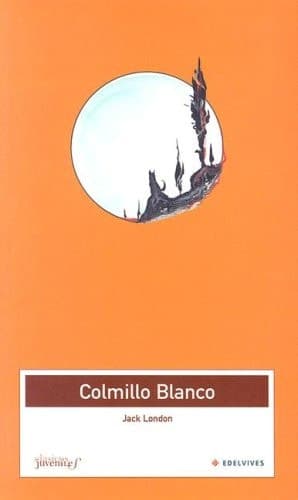
Colmillo Blanco
Jack LondonPublished2006
Pages279
Formatpaperback
PublisherLuis Vives Editorial (Edelvives)
Synopsis
Esta novela es casi la historia de una degradación. Rousseau decía del hombre que nace naturalmente bueno y se pervierte al contacto con la sociedad. London lo aplica al mundo del animal. Colmillo Blanco, el perro-lobo salvaje que no conoce más leyes que las de la naturaleza, irá agudizando sus instintos de ferocidad o violencia a imagen y semejanza de los hombres. "Si el lobezno hubiera pensado como los hombres --dice London--, habría calificado la vida como un voraz apetito, y el mundo como un caos gobernado por la suerte, la impiedad y el azar en un proceso sin fin." Por fortuna, Colmillo Blanco encontró al "señor del amor" al borde de la muerte.
Recommendations
Generating recommendations…
Our AI is preparing recommendations for Colmillo Blanco. This usually takes under a minute.
About Jack London
J
Jack London
1876–1916
John Griffith London (born John Griffith Chaney; January 12, 1876 – November 22, 1916) was an American novelist, journalist, and social activist. A pioneer in the world of commercial magazine fiction, he was one of the first writers to become a worldwide celebrity and earn a large fortune from writing. He was also an innovator in the genre that would later become known as science fiction. His most famous works include *The Call of the Wild* and *White Fang*, both set in the Klondike Gold Rush, as well as the short stories "To Build a Fire", "An Odyssey of the North", and "Love of Life". He also wrote about the South Pacific in stories such as "The Pearls of Parlay", and "The Heathen". London was part of the radical literary group "The Crowd" in San Francisco and a passionate advocate of unionization, workers' rights, socialism, and eugenics. He wrote several works dealing with these topics, such as his dystopian novel The Iron Heel, his non-fiction exposé *The People of the Abyss*, *The War of the Classes*, and *Before Adam*. **Source**: [Jack London](https://en.wikipedia.org/wiki/Jack_London) on Wikipedia.
View author page