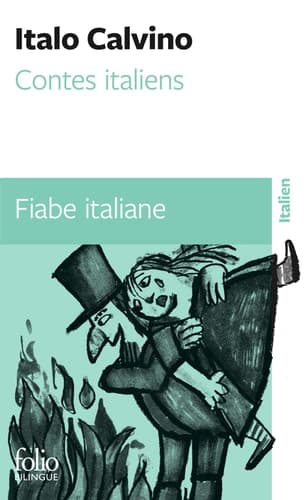
Synopsis
Italo Calvino a fouillé dans la mémoire des régions italiennes, dont il a souvent transcrit ou réécrit le patois pour constituer ce recueil de contes. Travail de chercheur, d'ethnographe et surtout d'écrivain qu'il aborda avec curiosité pour se trouver jeté dans le monde fantastique du merveilleux populaire italien. Entre ironie et poésie, ces textes courts sont souvent de petites fables philosophiques qui s'adressent plus aux adultes qu'aux enfants.
Recommendations
Mr Palomar
by Italo Calvino
Wait—I know you just finished Calvino, but hear me out. If you loved the philosophical fables woven through *Contes Italiens*, this prose poem collection takes that same meditative quality and applies it to everyday modern moments. Where the folk tales distill wisdom through the fantastical, *Mr. Palomar* finds the same depth in a man observing a beach, a cheese shop, or his own garden—it's Calvino's ethnographic eye turned inward.
View book
The Uses of Enchantment The Meaning and Importance of Fairy Tales
by Bruno Bettelheim
This is my surprise pick for you. Rather than another collection of tales, Bettelheim analyzes *why* folk narratives and fairy stories work the way they do—examining the psychological architecture beneath exactly the kind of popular Italian stories Calvino collected. It's part literary criticism, part philosophy, and it'll deepen your appreciation for what you just read by showing you the hidden scaffolding.
View book
Angela Carter's Nights at the Circus
by Helen Stoddart
Carter does for European fairy tales and folk traditions what Calvino does for Italian ones—she rewrites, reimagines, and infuses them with irony and sensuality. Her prose has that same quality of mixing the fantastical with the deeply human, but she's working in longer narrative form, so you get to sink into her baroque, playful voice for a full novel rather than in fragments.
View book
The Apocalyptic Vision of Mikhail Bulgakov's the Master and Margarita (Studies in Slavic Language & Literature)
by Edward E. Ericson
Published in the 1960s but written decades earlier, this Russian masterpiece shares Calvino's gift for embedding philosophical questions inside wildly imaginative narratives—here, a devil visits Soviet Moscow while a writer struggles with his own manuscript. The layering of stories-within-stories and the blend of the mundane with the supernatural will feel familiar, but Bulgakov's scope and ambition operate on a grander scale.
View book
The Savage Detectives A Novel
by Roberto Bolaño
Here's a contemporary work that channels Calvino's ethnographic curiosity but through a fractured, almost obsessive lens. Bolaño follows a group of poets across Mexico and Europe, collecting fragments of stories, conversations, and observations—it's like watching someone conduct fieldwork the way Calvino did with Italian folklore, but in real time, with all the mess and digression intact. The tone shifts between lyrical and darkly comic in ways that echo those philosophical fables you loved.
View bookAbout Italo Calvino
I
Italo Calvino
1923–1985
Italo Calvino (Santiago de Las Vegas de La Habana, 15 ottobre 1923 – Siena, 19 settembre 1985) è stato uno scrittore e paroliere italiano. Intellettuale di grande impegno politico, civile e culturale, è stato uno dei narratori italiani più importanti del secondo Novecento. I numerosi campi d'interesse toccati dal suo percorso letterario sono meditati e raccontati attraverso capolavori quali la trilogia de *I nostri antenati, Marcovaldo, Le cosmicomiche, Se una notte d'inverno un viaggiatore,* uniti dal filo conduttore della riflessione sulla storia e la società contemporanea. ---------- Italo Calvino (Italian: [ˈiːtalo kalˈviːno]; 15 October 1923 – 19 September 1985) was an Italian journalist and writer of short stories and novels. His best known works include the *Our Ancestors* trilogy (1952–1959), the *Cosmicomics* collection of short stories (1965), and the novels *Invisible Cities* (1972) and If on a winter's night a traveler (1979). Lionised in Britain and the United States, he was the most-translated contemporary Italian writer at the time of his death, and a noted contender for the Nobel Prize for Literature.
View author page