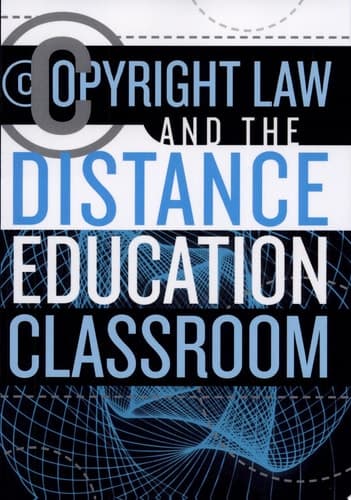
Copyright Law and the Distance Education Classroom
Tomas A. LipinskiPublished2005
Pages227
Formatpaperback
PublisherBloomsbury Publishing PLC
Synopsis
As technology and the idea of distance education is rapidly changing, so too must the law that protects copyrighted material. In 2003 U.S. copyright law was amended with the legislation now known as TEACH (Technology Education and Copyright Harmonization). Tomas Lipinski discusses these changes to copyright law and how they may ultimately affect traditional distance classrooms. Providing a step-by-step explanation of the law and how it impacts these pedagogical issues, Lipinski discusses instructor ownership issues, a general application of "fair use," and other issues that will inevitably arise when technology, intellectual property, and education all intersect.
Tomas Lipinski is a lawyer, and he approaches these volatile (and very new) issues from a legal perspective. This book, however, is written in intermediate terms that will make it accessible (as well as necessary) to the distance educator and administrator. As the framework for distance education and technology (particularly copyright) law is now set in place, this book will prove an invaluable resource for years to come.
Recommendations
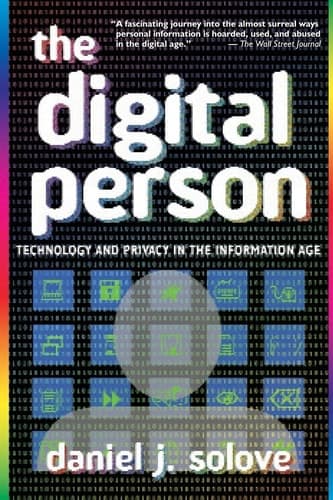
The Digital Person Technology and Privacy in the Information Age
by Daniel J Solove
Solove writes about how digital technology intersects with law and personal rights—much like Lipinski does—but he approaches it from a privacy angle rather than copyright. You'll appreciate his ability to make complex legal concepts feel urgent and relevant without dumbing them down, and he has that same gift for explaining why these abstract rules actually matter in classrooms and workplaces.
View book
The Apocalyptic Vision of Mikhail Bulgakov's the Master and Margarita (Studies in Slavic Language & Literature)
by Edward E. Ericson
This is the surprise pick—a 1960s Russian novel that's ostensibly about a devil visiting Soviet Moscow. But what makes it relevant to you is how Bulgakov explores censorship, intellectual property, and the power dynamics between creators and institutions. The novel itself was suppressed for decades, making it a living example of the copyright and control issues you've just been reading about, told through brilliant satire rather than legal briefs.
View book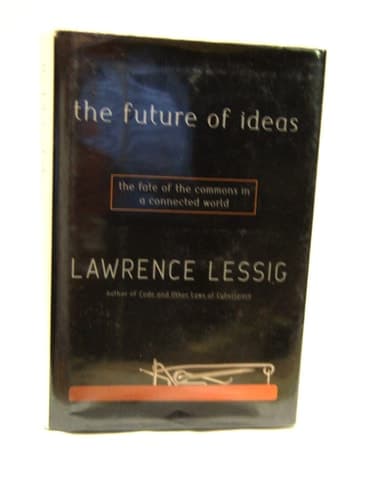
The Future of Ideas: The Fate of the Commons in a Connected World
by Lawrence Lessig
Lessig is a legal scholar like Lipinski, but he's arguing the opposite direction—that copyright law has become *too* restrictive and is strangling innovation and creativity. Reading this after Lipinski gives you both sides of the debate, and Lessig's writing has an almost polemical energy that makes you feel like you're in a conversation rather than reading a textbook.
View book
A Journey Into the Spiritual Quest of Who We Are # 3 The Knowledge That Was Once Forbidden by Some of the Ancient Beings
by Michael Kiser
Sloman explores how knowledge actually works in communities and institutions—relevant to your interest in how education functions when copyright and technology reshape it. He writes with the clarity of someone trained in cognitive science but writing for general readers, similar to how Lipinski translates legal jargon into accessible language for educators.
View book
The Wealth of Networks How Social Production Transforms Markets and Freedom
by Yochai Benkler
Benkler examines how digital networks are creating new economic and social models—including how people share knowledge and creative work. He's writing about the *why* behind the legal questions Lipinski addresses, exploring what happens when copyright law meets peer-to-peer production and open-source culture. It's the philosophical companion to the legal framework you just learned.
View bookAbout Tomas A. Lipinski
T
Tomas A. Lipinski
Born 1958
Biography coming soon.
View author page