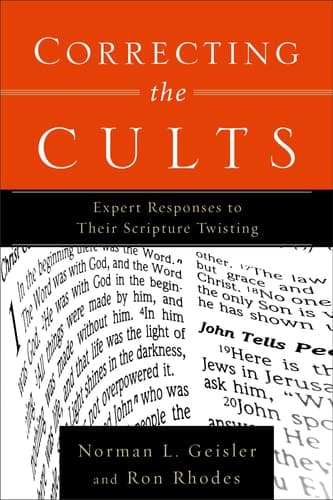
Correcting the Cults Expert Responses to Their Scripture Twisting
Norman L. GeislerPublished2005
Pages368
Formatpaperback
PublisherBaker Publishing Group
Synopsis
Cults like Mormonism, Jehovah's Witnesses, and the New Age movement are ensnaring people by the millions. Why do so many flock to these perversions of Christianity? And how can we reason with them to help them see that Jesus is the only way to eternal life?
Correcting the Cults is designed to help the reader do just that. After a thorough introduction on understanding the nature and characteristics of cults, the authors take the reader through the Bible, examining Scripture passages that cult adherents traditionally misinterpret to support and validate their own doctrines.
This comprehensive, accessible, and intelligent resource is an important tool for pastors, students, and anyone who knows a cult member or someone considering a cult.
Recommendations
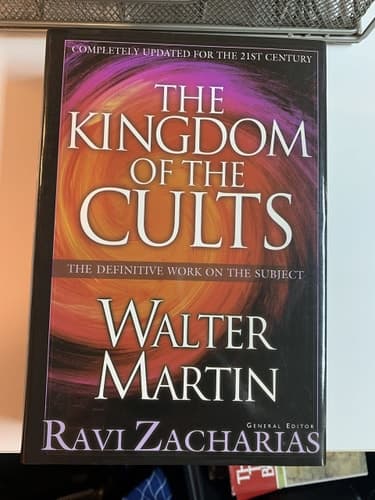
The Kingdom of the Cults
by Walter Martin
Walter Martin's work is the foundational text that Geisler builds upon, but this revised edition offers Martin's original framework with fresh scholarship. Where Geisler focuses on Scripture interpretation, Martin gives you the historical and sociological roots of why these movements emerge—you'll understand not just what cults teach, but how they recruit and retain followers psychologically.
View book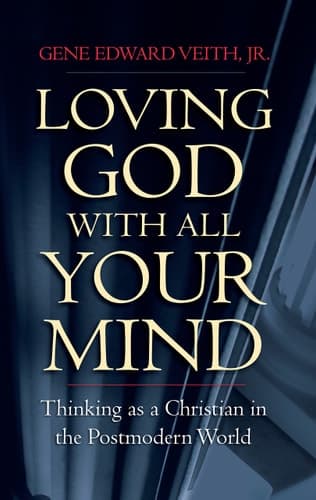
Loving God with All Your Mind Thinking As a Christian in the Postmodern World
by Gene Edward Veith Jr
Ferguson takes the defensive posture of Geisler's work and flips it into something constructive—rather than just correcting false doctrine, he builds a coherent theological framework so you can recognize distortions before encountering them. His writing is remarkably clear without being simplistic, and he addresses the philosophical underpinnings that make certain heresies appealing.
View book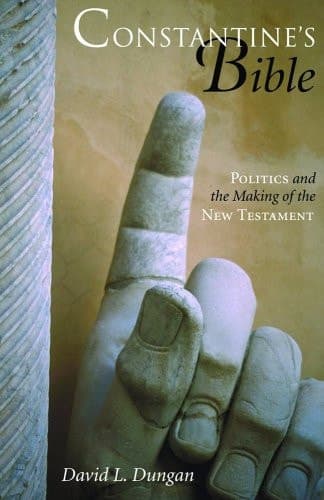
Constantine's Bible Politics and the Making of the New Testament
by David L. Dungan
This is the scholarly deep-dive that contextualizes why we trust the biblical texts Geisler references. Bruce walks you through how early Christians determined which writings were authoritative, which directly addresses why cults' alternative scriptures (Book of Mormon, Watchtower publications) fail the historical and textual tests that legitimate Scripture passes. It's detective work, really.
View book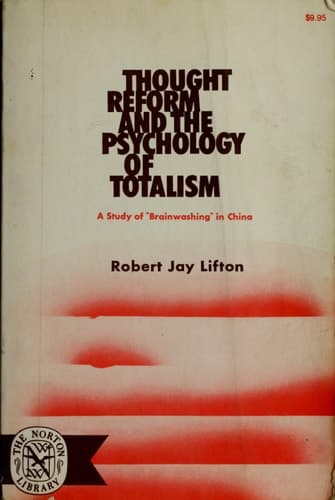
Thought Reform and the Psychology of Totalism
by Robert Jay Lifton
Here's your left-turn recommendation: Lifton's 1961 study of Chinese brainwashing techniques reads like a psychological thriller, but it's essential for understanding *how* cults maintain control beyond just doctrine. While Geisler corrects the theology, Lifton explains the mechanisms of thought control that make people resistant to correction—invaluable if you're actually trying to reason with someone caught in a cult.
View book
Orthodoxy (Contemporary Christian Insights)
by G. K. Chesterton
Chesterton's 1908 classic does something Geisler doesn't attempt—he makes Christian orthodoxy feel *attractive* rather than just correct. His paradoxical style (arguing that Christianity is both the most rational and most romantic worldview) is the antidote to why cults seduce people: they offer false certainty and false wonder. Reading Chesterton after Geisler gives you the positive case, not just the negative one.
View bookAbout Norman L. Geisler
N
Norman L. Geisler
Born 1932
Biography coming soon.
View author page