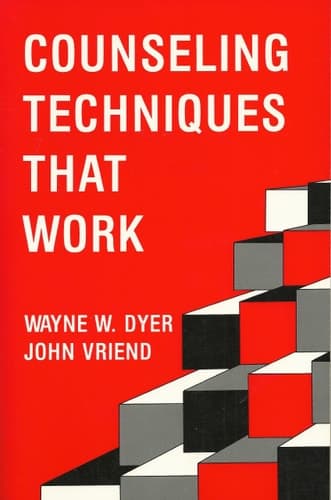
Counseling Techniques that Work
Wayne W. DyerPublished1988
Pages288
Formatpaperback
PublisherAmerican Association for Counseling and Development
Synopsis
The first part of this two-part book on counseling techniques emphasizes techniques for counselor training and individual counseling. Chapter 1 defines counseling and includes a rating scale for determining effectiveness of counselor performance. Chapter 2 provides a presentation of the composition of an effective initial counseling interview and includes 15 essential components of a first counseling session. Chapter 3 considers how to understand and help chronic drug users. Chapter 4 introduces productive writing activities associated with increased counselor competence. Chapter 5 is a reprint of an article from the "Journal of Counseling Psychology" which contains fundamental principles and operational strategies for counselors working with reluctant clients. Chapter 6 presents an actual counseling experience. Chapter 7 provides essential background thinking out of which effective counselor behaviors emerge. The second part of the book focuses on group counseling techniques that work. Chapter 8 provides a definition and 20 assumptions upon which the definition of group counseling is founded. Chapter 9 details 20 group counselor behaviors, chapter 10 presents 19 special techniques and strategies, chapter 11 chronicles interventions for specific and appropriate times in the group counseling process, and chapter 12 focuses on eliminating major barriers to effectiveness in group counseling. Chapter 13 presents the step-by-step formulation and operation of an experimental counseling group. Chapter 14 presents practical suggestions, techniques, and methods for utilizing role working in counseling groups. (NB)
Recommendations
Generating recommendations…
Our AI is preparing recommendations for Counseling Techniques that Work. This usually takes under a minute.
About Wayne W. Dyer
W
Wayne W. Dyer
1940–2015
Wayne Walter Dyer was an American philosopher, self-help author, and a motivational speaker. His first book, Your Erroneous Zones, is one of the best-selling books of all time, with an estimated 35 million copies sold to date. - Wikipedia
View author page