Synopsis
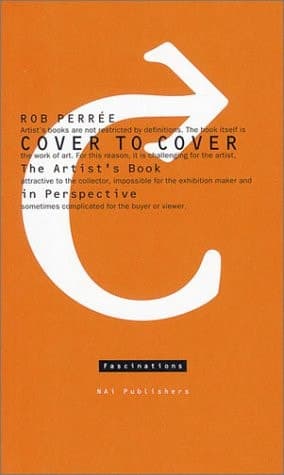
Sol Lewitt makes them, Christian Boltanski does too. And Hamish Fulton, Francesco Clemente, Anselm Kiefer, Richard Long, Ulises CarriAn, Lawrence Weiner, Richard Prince, and Andy Warhol. And many, many more. Examining the phenomenon of artist's books, Cover to Cover looks at the history of these bound objects within the context of art history. Concentrating particularly on artist's books created during the heyday of conceptual art, this volume describes the leading motives of publishers, collectors, and buyers, pinpointing to what extent artist's books and catalogs are distinct from one another, and why one genre increasingly contains references to the other. In his essay, Rob Perrae considers issues of presentation and offers a prediction about the future of the artist's book. Published in conjunction with De Beyerd, Breda..
Recommendations
A Book of the Book: Some Works and Projections about the Book & Writing
by Steven Clay
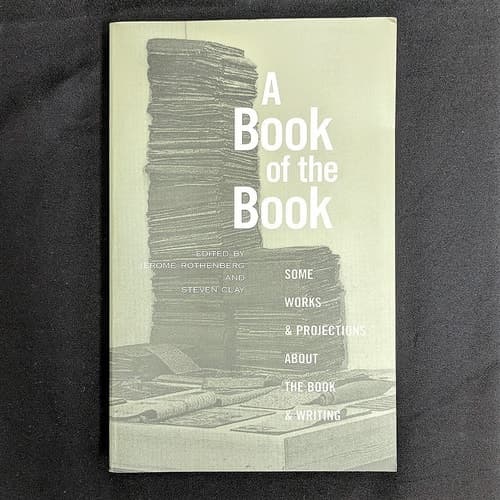
Rothenberg's collection directly parallels Lewitt's investigation by treating the book itself as an art object worthy of conceptual experimentation. Where Cover to Cover traces how artists reclaimed the bound form from commercial publishing, Rothenberg actually demonstrates it—his pages become visual compositions, texts fragment and reassemble, and you'll find yourself reading about bookness while experiencing it simultaneously.
View book
Second Sight (The Arcane Society, Book 1)
by Amanda Quick
Here's your surprise pivot: instead of more art theory, Horowitz explores how books themselves became objects of mystical power and transformation in Western culture. It shares Lewitt's fascination with books as vessels of meaning-making, but approaches it through cultural history rather than art history—you'll see how the reverence for the bound object runs deeper than the gallery world.
View book
Critical Mass Happenings, Fluxus, Performance, Intermedia, and Rutgers University, 1958-1972
by Mead Art Museum (Amherst College)
Friedman documents the Fluxus movement's radical approach to art-making, which overlaps significantly with the conceptual art era Lewitt privileges. Many of the artists in Cover to Cover were influenced by or participated in Fluxus events, and this book captures that anarchic, anti-commercial spirit that made artist's books feel like necessary resistance rather than luxury objects.
View book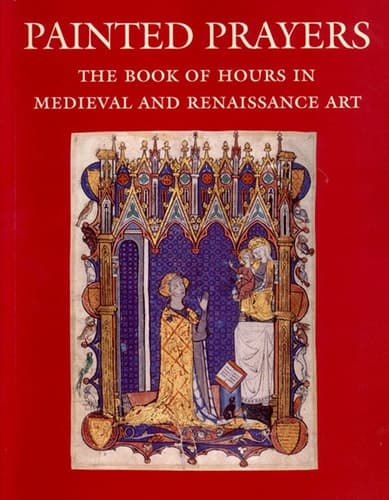
Painted Prayers The Book of Hours in Medieval and Renaissance Art
by Roger S. Wieck
A deliberate historical reach backward: Pettegree shows how the printed book's emergence in the 15th century fundamentally altered how humans could think and organize knowledge. Reading this after Lewitt creates a fascinating dialogue—you'll see that artists' reclamation of the book form in the 1960s-70s was actually a return to the book's original revolutionary potential, before it became domesticated into commercial publishing.
View book
Abraham Lincoln in Print and Photograph A Picture History from the Lilly Library
by Lilly Library (Indiana University, Bloomington)
Landau and Parshall's monumental study of printmaking history gives you the technical and cultural genealogy behind why artists turned to reproducible, bound forms in the first place. It's the missing chapter before Lewitt's story—understanding etching, lithography, and woodcut traditions helps you see why conceptual artists found the book format so philosophically rich: it's about reproducibility, distribution, and democratizing the art object.
View bookAbout Sol LeWitt
Biography coming soon.
View author page