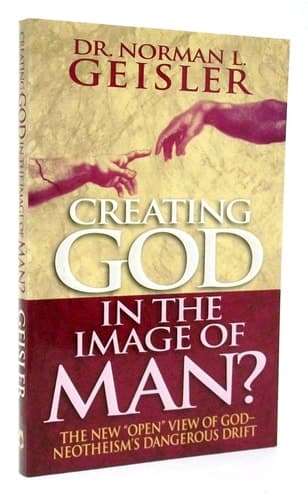
Creating God in the Image of Man?
Norman L. GeislerPublished1997
Pages191
Formatpaperback
PublisherBethany House
Synopsis
An examination of the "Neo-theism" view that seems to put human limitations on God, and how this view falls short of historical Christian belief.
Recommendations
The God Who Is There
by Francis A. Schaeffer
Schaeffer tackles the same tension between God's transcendence and His relationship to creation, but approaches it through cultural analysis and apologetics rather than systematic theology. Where Geisler defends classical theism against process theology, Schaeffer shows why that classical view actually makes sense of the world we observe—you'll find his method of engaging opposing worldviews deeply satisfying if you appreciated Geisler's rigor.
View book
The Nature of Necessity
by Alvin Plantinga
Plantinga builds a metaphysical framework that actually addresses some of the same concerns about divine omniscience and human freedom that Neo-theism tries to solve—but he does it without compromising God's transcendence. His modal logic approach is more technical than Geisler's, offering you a different angle on why classical Christian theology doesn't require us to limit God's knowledge.
View book
The Openness of God A Biblical Challenge to the Traditional Understanding of God
by Clark H. Pinnock
This is the actual Neo-theist position that Geisler was critiquing—reading Pinnock's case directly will deepen your understanding of what's really at stake in this debate. Rather than just seeing the view through its critic's lens, you'll grasp the internal logic of why some theologians find open theism biblically compelling, which makes for richer theological thinking.
View book
Gödel, Escher, Bach: An Eternal Golden Braid
by Douglas Hofstadter
Here's your surprise pick: Hofstadter explores self-reference, infinite regress, and the nature of consciousness through mathematics and art rather than theology—but the underlying questions about limits, infinity, and what it means for something to be 'complete' mirror the philosophical foundations beneath Geisler's argument. It's a completely different register, but it'll sharpen your thinking about the logical structures that make classical theism coherent.
View book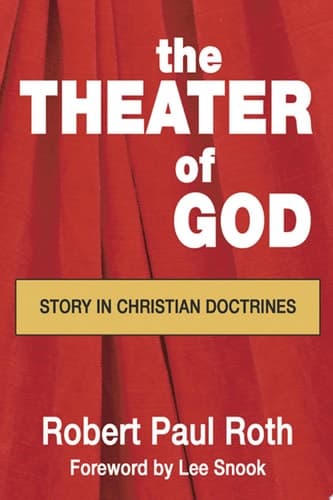
The Theater of God Story in Christian Doctrines
by Robert Paul Roth
Helm provides a more recent (2010s) systematic treatment of divine attributes that engages contemporary philosophy of time and causation—where Geisler was writing in 1997, Helm incorporates newer discussions about presentism and divine atemporality. If you want to see how the classical theism vs. Neo-theism conversation has evolved, this gives you the updated landscape without losing the theological precision you clearly appreciate.
View bookAbout Norman L. Geisler
N
Norman L. Geisler
Born 1932
Biography coming soon.
View author page