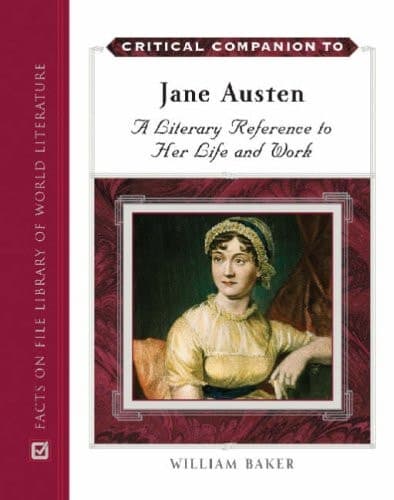
Critical Companion to Jane Austen A Literary Reference to Her Life and Work
William BakerPublished2008
Pages644
Formathardcover
PublisherFacts On File
Synopsis
Jane Austen has been one of the world's most popular writers for 200 years and is best known for her works ""Pride and Prejudice"", ""Emma"", and ""Sense and Sensibility"". Taught in high school and college classes across the country and appealing to both scholars and general readers, her novels, many of which have been adapted into popular films, continue to be best sellers today.""Critical Companion to Jane Austen"" examines her life and works, and includes critical analyses of the themes within her writing, as well as entries on related topics and relevant people, places, and influences.
Recommendations
The Jane Austen Book Club
by Karen Joy Fowler
Rather than analyzing Austen from the outside, Fowler lets her characters discover themselves through reading Austen's novels—each person finds their own Elizabeth Bennet or Emma Woodhouse reflected back at them. It's a meta-love letter to what you've just studied, but experienced through the messiness of real people trying to live by Austen's wit and wisdom.
View book
A.S. Byatt's Possession A Reader's Guide
by Catherine Burgass
Byatt constructs an intricate mystery around two literary scholars obsessed with uncovering the hidden relationship between two Victorian poets—much like Baker's companion traces connections through Austen's life and work. The novel itself contains embedded poems, letters, and critical apparatus that reward the kind of close reading you've just practiced, while telling a genuinely gripping story.
View book
The Most Eligible Doctor
by Karen Rose Smith
This is a contemporary Cincinnati retelling of *Pride and Prejudice* that doesn't just update the plot—it interrogates what Austen's social commentary actually means when transplanted to modern dating apps, healthcare, and class anxiety. If you've been reading Baker's analysis of Austen's themes, you'll find Sittenfeld actively arguing with those themes through her reimagining.
View book
A Season of Opera From Orpheus to Ariadne
by M. Owen Lee
This is the surprise pick: a classical mythology retelling told from the perspective of a woman whose story was never hers to tell. Like Austen, Saint is interested in how women navigate constrained worlds with intelligence and agency, but she's working with ancient Greek tragedy rather than drawing rooms—yet the emotional and intellectual precision feels remarkably Austenian.
View book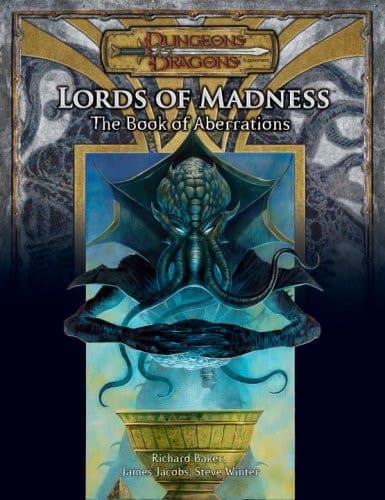
Lords of Madness The Book of Aberrations
by Richard Baker
Before you dismiss this as 'just a romance'—Ashley's Regency-era hero is neurodivergent in ways the period would never have named, and the novel takes his perspective seriously rather than pathologizing it. There's real Austenian intelligence here in how the heroine sees past social performance to the person underneath, and the banter has genuine wit rather than mere flirtation.
View bookAbout William Baker
Biography coming soon.
View author page