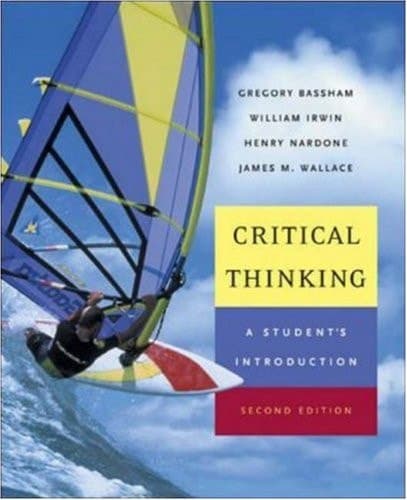
Critical Thinking A Student's Introduction with PowerWeb: Critical Thinking
Gregory BasshamPublished2004
Pages608
Formatpaperback
PublisherMcGraw-Hill Higher Education
Synopsis
Through the use of humor, fun exercises, and a plethora of innovative and interesting selections from writers such as Dave Barry, Al Franken, J.R.R. Tolkien, as well as from the film The Matrix, this text hones students' critical thinking skills. Students will find this text enjoyable and memorable; instructors will find it and its accompanying supplements effective and easy to use.
Recommendations

Thinking Past Terror Islamism and Critical Theory on the Left
by Susan Buck-Morss
Kahneman takes the critical thinking framework Bassham introduces and shows you exactly how your brain *fails* at it—with the same accessible humor and real-world examples. Where Bassham teaches you the tools, Kahneman reveals why you'll instinctively want to ignore them, making this the perfect natural next step in understanding how reasoning actually works in practice.
View book
The Demon-haunted World Science as a Candle in the Dark
by Carl Sagan
Published in 1996, this is Bassham's spiritual predecessor—Sagan uses the same blend of humor, pop culture references, and engaging storytelling to teach logical reasoning, but his focus is specifically on how to spot pseudoscience and bad arguments in everyday life. It's like watching a master class from someone who clearly influenced the critical thinking textbook movement.
View book
Gödel, Escher, Bach: An Eternal Golden Braid
by Douglas Hofstadter
This one's a departure from straightforward instruction, but it's the book for someone who loved Bassham's Matrix references—Hofstadter builds an entire philosophical argument through dialogue, puzzles, and playful recursion, asking you to think about thinking itself. It requires the critical thinking skills you've just learned, then uses them as the actual subject matter.
View book
Thank You for Arguing What Aristotle, Lincoln, and Homer Simpson Can Teach Us about the Art of Persuasion
by Jay Heinrichs
Heinrichs takes the logical reasoning you've learned and shows how to actually *use* it in arguments—he's got the same irreverent tone as Dave Barry (whom Bassham quotes), mixing classical rhetoric with modern examples like Homer Simpson and political debates. It's critical thinking applied to the real world where people actually try to convince you of things.
View book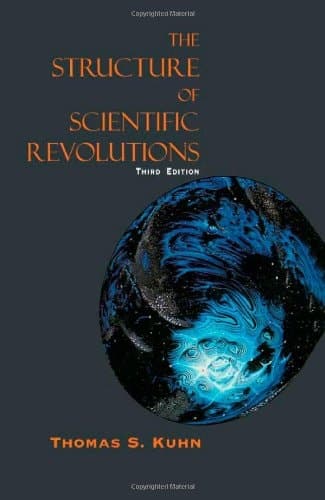
The Structure of Scientific Revolutions
by Thomas S. Kuhn
Here's the philosophical deep end: Kuhn challenges how we even *define* rational thinking by examining how science actually progresses—it's the book that makes you question whether critical thinking is as objective as it seems. It's denser than Bassham, but it's the intellectual payoff for someone ready to think critically about critical thinking itself.
View bookAbout Gregory Bassham
G
Gregory Bassham
Born 1959
Biography coming soon.
View author page